 Reviewed by Namitha Rathinappillai
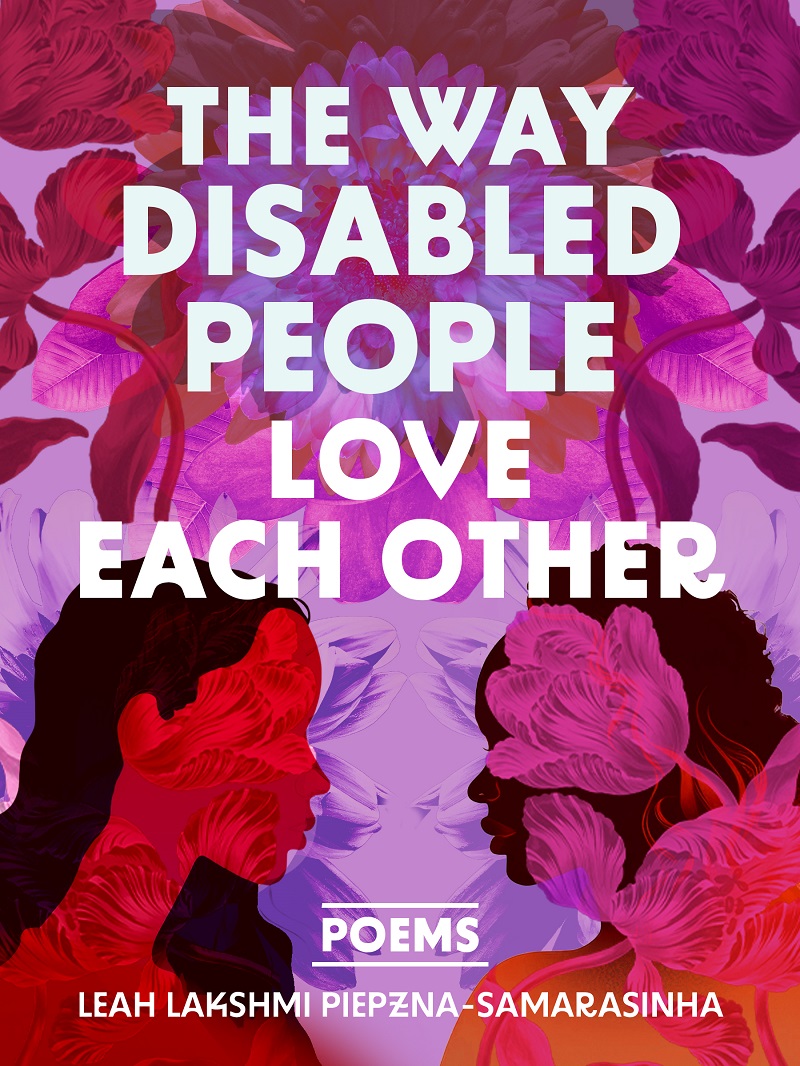
Leah Lakshmi Piepzna-Samarasinha, The Way Disabled People Love Each Other (Arsenal Pulp Press, 2026), 112pp., $21.95.
Emma McKenna, Gold Star (Book*Hug Press, 2026), 88pp., $22.95.
In the canon of poetry published in Canada, to read about disability at all still feels novel. But two recent collections—one from veteran poet and essayist Leah Lakshmi Piepzna-Samarasinha and another from comparative newcomer Emma McKenna—examine the multiplicities of disabled experience with candour, complexity, and intimacy.
Piepzna-Samarasinha’s fifth book of poems, The Way Disabled People Love Each Other, is a collection-long ode to disabled kin—both alive and once-alive—and the myriad acts of community care they have observed and that they manifest for our collective crip future. And where The Way Disabled People Love Each Other looks outward toward community, the poems in Emma McKenna’s Gold Star frequently apply an inward lens, in a voice both vulnerable and contemplative.
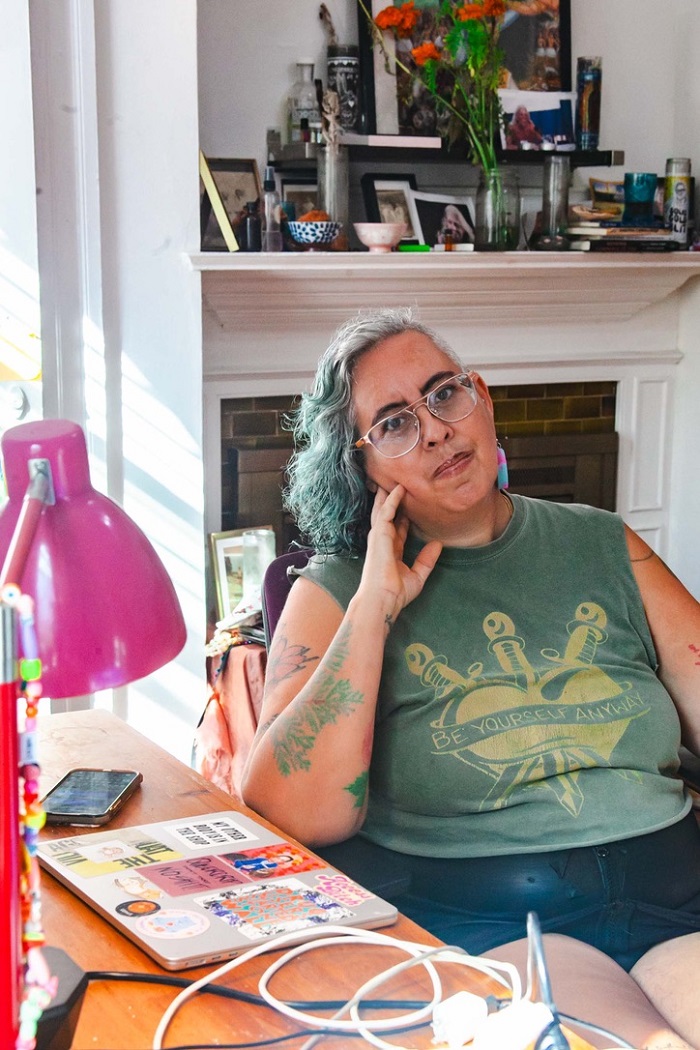
Photo credit: Muyricco.net
The epigraph of The Way Disabled People Love Each Other includes a powerful call to action, in the form of a quote from Jamaican American poet and activist June Jordan: “Some of us did not die. The question is, / what are we going to do about it?” Acting as a formidable compass for this collection, the epigraph directs us towards compassion, hope, and a sense of deep gratitude and equal responsibility. With the focus on a commitment to living, we may transform this gratitude into a commitment to ourselves, our community, and our descendants.
Piepzna-Samarasinha does not shy away from naming COVID-19 and the impact it has had on the disabled community. In their poem “All the Little Ways We Keep Ourselves Alive,” they refer to kin who have passed:
you who were not killed exactly from covid
but from all the ways they did not know how to welcome yourcrip body into the surgical suite (92)
There is a naming of the layered experience of disability during a mass disabling event: that even in institutions meant to heal and care, there is a complexity to the ways these systems can fail us.
However, even in this profound grief, Piepzna-Samarasinha writes with an equal hope. That same poem concludes:
where I would lie and cry and watch the world bloom
and die anyway
in the cripple way
it always is (93)
Parallels to the cyclical and reciprocal nature of cripness and the natural world draw the reader in—not only as a visualizing tool, but as a worldbuilding mechanism.
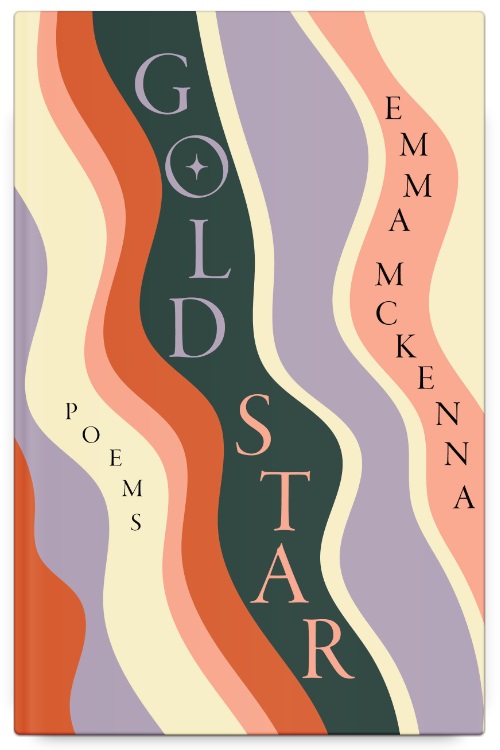 In Gold Star, Emma McKenna’s sophomore collection, the poet offers a similar level of reflectiveness in sharing her own narratives of disability. This is seen best in the poem “Half-Life.” She writes, “Half this life ago I collapsed and rolled myself inward / it went dark and was quiet” (25). This gloomy purgatory is one to which many of us can intimately relate. Given this darkness, it is a great encouragement that she writes openly and unashamedly about the value of community support during this time, and with deep reverence for this emotional (re)nourishment.
“Half-Life” continues:
I wanted to stay forever in that place with supervision
kitchen stocked without question […]it was like an infancy of relearning how to move
connecting parts together (25-26)
This frankness about not only needing—but accepting—support, and what this may concretely look like to receive, I hope serves as a valuable model for others: that we need not just live in hardship but truly believe that others will support us in navigating it.
In a community where there is profound loss, Piepzna-Samarasinha’s voice is a valiant and necessary echo. In “How we made it,” they write, “I poured out most of it this year / so many prayers and I sipped the rest” (90). The author creates a sobering image for the reader; in using the imagery of a drink, we may see the different ways to honour those we have lost as well as ourselves: that while there is an abundance of grief, we are still living, and that is worth celebrating, too. I have a deep appreciation and respect for Piepzna-Samarasinha’s multi-truth and temporal depictions of disability.
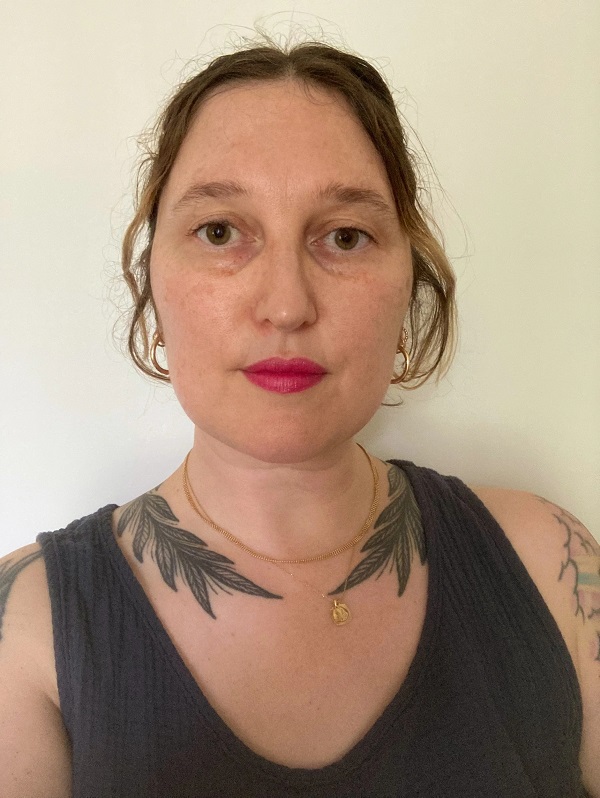
Photo credit: Emma McKenna
While McKenna speaks about multiple identities in Gold Star—including disability, class, sexuality, gender presentation, and survivorship—I found myself wishing for a more sustained exploration of their intersections and the distinctive ways they shape her experiences of disability and queerness. Given that the author names the Prairies throughout the collection, I found myself wanting to hear more about how that landscape informs experiences of queerness and disability, as seen in the work of poets such as Nisha Patel.
I appreciated how, formally, McKenna’s use of the page adds complexity and creativity to the poems. “Section 271,” named for the portion of the Canadian Criminal Code relating to sexual assault, is divided into 5 sections that draw upon the structure of a song: “Victory Waltz,” “Verse,” “Refrain,” “Chorus,” and “Bridge.” It begins:
Victory Waltz
if they look for evidence, what are they looking for. if
evidence is found, what does the finding determine. if
the determination requires a telling, when does the
telling become the crime. when does the not telling
become a lack. or the telling the lacking. the evidence
the determination. the lack the evidence of the looking.
the lack of the evidence the looking. the looking the
telling. if they are looking for an ending, tell them to
start again. (47)
Through the words themselves, the parallel structure, the use of punctuation, McKenna depicts profound defeat and dissociation. Seemingly minor details come together in a pointedly clipped and clinical manner, painting a sombre portrait of the experience of sexual-assault survivors in Canada.
To read a disabled elder revere those who have supported them along the way feels especially intimate. In “on my 40th birthday,” Piepzna-Samarasinha writes about the mobility device they receive as a gift from their sibling: “Brother […] gives me a steady beautiful thing to lean on, that will carry me through my 40s” (97). The poem concludes:
[…] maybe with these
beautiful things that hold us up, my own cane’s handle worn smooth,
nailpolish aging like the ceiling of the sistine chapel or some shit,
from 7 years of cripple brother’s hood art holding me up through
all this thing called life. (98)
This familial ode is a vulnerable sharing of indebtedness and serves as an esteemed reminder that there is no need to do it alone, and that there is a great vulnerability in accepting kinship, too.
Near the end of The Way Disabled People Love Each Other, Piepzna-Samarasinha alludes to the collection’s title in the tender “Elegy for a soldier”:
Disabled people don’t forget
each other, we love each other
forever-ever
They tried to lose you from us
but you are always and forever
found to me (106)
These images of loss of varying temporalities are a sagacious interpretation of crip time and intimacy.
Gold Star and The Way Disabled People Love Each Other, each in its own way, serve as odes to a community marginalized, rendered invisible, and seen as disposable. Both McKenna and Piepzna-Samarasinha discuss the kaleidoscopic range of disabled lived experience—seen through the lens of their various identities, communities, and experiences of kinship and support—with tender importance.
 Namitha Rathinappillai (she/they) is a queer Tamil poet, organizer, and workshop facilitator. She is currently based in Toronto with their two cats, Halloumi and Paneer.