Interview by Shawn Syms
In connection with the annual Victoria Festival of Authors taking place October 12 to 18, 2026, Plenitude book reviews editor Shawn Syms interviews Jordan Abel, a queer Nisga’a writer from Vancouver and author of multiple books including The Place of Scraps, Un/inhabited, Injun, NISHGA, and Empty Spaces. His latest, a book of poems called Dad Era, displays all of the same characteristics present in his prior work—unflinching honesty and intricacies of themes, content, and form—while turning his attention—joyfully, humorously—toward the pleasures of being a new father.
Shawn Syms (SS): Your work has always centred the Indigenous reader, while inviting settler readers into dialogue about colonialism and its harms. Dad Era is directed toward a very specific Indigenous reader: your young daughter, Phoenix. Could you talk about her engagement with the work, both during the creation process and after publication, and how this may have affected the creative and emotional timbre of making Dad Era compared to some of your other works?
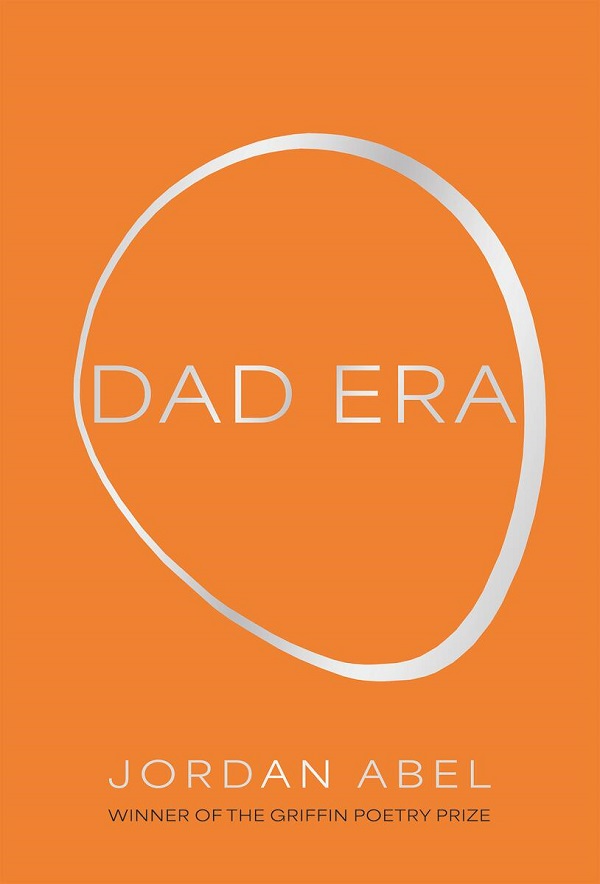 Jordan Abel (JA): Yes, what a great question! I think I’d start by saying that this book would not be possible without her. Which is to say that Dad Era is a book that only exists because Phoenix exists in my life. I’ve read bits and pieces of the book ever since I started writing it, and I tried to read the entire book to her just before it went to press but she got bored. When the book came out, I read the whole thing to her and she loves it. Minus a few lines that she really disagrees with! I’m honestly really happy how much she likes this book–she tells anyone that will listen that her Dad wrote this book, and that warms my heart.
To answer the part about Indigenous readers, I’d say that it is important for me as a writer to always keep in mind Indigenous readers. I always think how will my friends, or my auntie, or my cousins encounter these lines. At the same time, I do think it’s incredibly important to welcome non-Indigenous readers into this space too. It’s a balance and sometimes a difficult one, but I always think if Indigenous readers aren’t engaged by my work then I have a problem lol.
SS: This book speaks to conceptions of knowledge transmission in the context of Indigenous fatherhood and Indigenous parenting–which surely can look like many different things, both in the urban context and other settings. In exploring these questions, are there other creative works and other thinkers that you would see Dad Era as in conversation with?
JA: There are many Indigenous authors that write about Indigenous parenting, but also about all the different kinds of parental relationships we have. Off the top of my head, I would say a few of those writers include David Robertson, Richard Wagamese, and Helen Knott. I’m absolutely in conversation with those authors and also one of the reasons that I really wanted to write this book was that I didn’t see the kinds of experiences that I was having with parenting represented in those books. There were definitely moments here and there that I felt overlapped with my experiences, but I also felt that I needed to write about it because it might fill a gap where others could affirm their own similar experiences.
SS: Foregrounding wonder, love and joy, Dad Era differs in some ways from other works that comprise your ongoing literary project, but it is no less nuanced or intricate. Throughout, much is achieved through careful juxtaposition–within the long poem itself, between that text and the accompanying visuals, within those visuals themselves, and the textual elements inside them.
As only one example, on page 20, hand-drawn text runs through the distressed, partially eroded image of a traditional Nisga’a killer whale (which a reader with some awareness may suspect is based on your own father’s artwork). Within that text, the found-online “Dad Quotes” that have coursed through the images on previous pages are now interrupted by another text fragment, one that appears to be excerpted from one of the more painful moments from NISHGA, where a friend speaks to you about the aftershocks of the trial of the man accused of killing 15-year-old Indigenous teen Tina Fontaine.
Many readers may not consciously digest all of this context, just as they may not overtly discern the contents of the photograph you’ve placed into a distorted ovoid within the artwork. Throughout the book in this way, the reader and viewer is arrested, their experience destabilized. With more cues than clues, you cause the recipient of this knowledge to stop and think. Can you describe your experience of generating such complexly layered work–both creatively, and if you are comfortable doing so, emotionally?
 JA: First off, thank you so much for your careful and deep reading! My hope for these sections is that readers encounter these pages first as images. When you encounter an image, you see the whole thing. There’s a different reading/interpretive process for encountering images than for encountering a page of text. I wanted readers to see the image and to dive in if they wanted to but also for them to feel free to move to the next page. I was also hoping the readers that wanted to spend more time with these sections would be rewarded for doing so–which is to say I wanted to build in layers that worked as both text and image.
There is a lot to say here, and I may only be able to answer some of your questions. Perhaps the first thing I should say is that all of those traditional Nisga’a images in the first movement are macro shapes of my dad’s artwork. All the detail and nuance of those original paintings have been turned to black. This is such an important detail, but also one that I think is very easy to miss. So it’s my dad’s art, but it also isn’t. As the movements proceed forward the shapes of the photographs/double exposes come to the foreground and those shapes are informed and bound by the contours of my dad’s art. The text, too, moves between and around those shapes. In the third movement, the contours of dad’s artwork are replaced with the shapes of the North Saskatchewan River, and just the photos/double exposures persist.
The text, as you’ve correctly pointed out, moves from anonymous internet advice on being a parent (and specifically being a dad) to small moments from both NISHGA and Empty Spaces that are re-written to include Phoenix in some way. I am truly amazed that you’ve picked up some of those intertextual references, and I’m generally not anticipating that most readers will spend too much time on these sections. But I do think this work tries to tie the threads together from my previous works, it tries to hold a few things in place. Whether or not it’s successful in doing so is another story!
SS: As someone who came to identify as bisexual late in life, I appreciated your observation: “Did you know that bisexuality is not something that you choose but rather something that chooses you?” It felt in keeping with a recurring theme in the book, that many things can be true at once, and that sense of self is something that transforms over time. You are direct in your artistic bios about identifying as a queer person, and you dip into some of that life experience in Dad Era in ways that are both wise, and sometimes very funny (the bookstore quip!). Can you speak to the place and value of queerness in your personal experience, in whatever ways you’d like to discuss: in your life, in your work, in your scholarship, in your communities?
JA: Thanks! Yes, I think it’s really important for me to take up that space in a way that I didn’t earlier in my career. For some reason as a bisexual person I always felt like I wasn’t queer in the right ways or in the legible ways, and that I shouldn’t take up that space that I thought was meant for others. But the more I thought about it the more I understood that it’s really important for me to speak to my own experiences and to hold open a space for others that might feel similarly.
SS: If Conceptualist poetics can be seen on a spectrum, your creative project is at the more rich and provocative pole–because form, content, and intention are all deeply disruptive to systems of control. Are there other writers and artists–particularly other Indigenous and/or queer/two-spirit//trans creators–whose work you see as closely aligned, and who you feel our readers ought to know more about?
JA: There are so many incredible writers who are engaged in very provocative and compelling projects.
Matthew Weigel is a writer who comes to mind that I would love more people to read. He has a brilliant book called Whitemud Walking that’s about Indigeneity and the archive, but it’s also about queerness and disability. It’s also a work that’s deeply inventive conceptually and also visually.
I’d also say Tenille Campbell is an incredible inspiration. Her work on Nedi Nezu and #IndianLovePoems are essential Indigenous books, and I love the way she centres joy in her work.
I recently read a book by Délani Valin called Shapeshifters that I absolutely adored. I was a bit late in getting to this book, but I really loved it, and Valin is such a talented writer.
SS: For some of us who are drop-outs or otherwise outside the academy, higher education and its institutional structures can sometimes seem rarefied and a place of privilege–but in your work and in published conversations, you’ve discussed the oppression that can function within those sites, and how it’s a job like any other–and not one that’s always either safe or secure. Could you speak to some of those challenges, but also to what you find most nourishing and rewarding about your pedagogical work?
JA: Yes, for sure! I think this is such an important question. The academy is just a space that we exist in sometimes, but it’s not the only space and it’s certainly not the most important space. Literature and ideas can and should exist outside of the academy, and for the most part I really do think the academy could do a much better job of engaging the communities of people on the outside and also dismantling the systems that gatekeep knowledge.
I really do value the stability that this work brings to my life–in some ways it’s lifesaving in that my work at the University of Alberta pays for my bills. That’s not nothing, but as I’ve said before it’s just a job.
One of the things that I’ve really been trying to do in my classes is to get students to go out into the world and engage with the literary and artistic communities in Edmonton. Last year one of the final projects in my class called “Community and Pedagogy” required the students to host a literary event in the community. They booked the venue, figured out catering, contacted a bunch of writers, and really put on an incredible event. I was so proud of their work, and I think it allowed us within the academy to offer something back to the communities that support and nurture us as writers.
SS: Artificial intelligence is a lightning rod for debate in literary communities. On one hand, its proliferation can cause environmental harm, and literary works have been ingested into large-language models without consent or compensation. On the other, many writers of colour explicitly employ AI in disruptive ways as part of their artistic practice. And Indigenous educators and activists around the world have collaborated on projects that use AI to power language-reclamation work while maintaining data sovereignty, often repurposing the work of colonial ethnographers for their own ends. As someone whose work has long remixed and repositioned wide-ranging content sources from the physical to the digital, do you have thoughts on the emergence of AI and its impact on creative work and creative communities?
JA: Yes, there are really powerful and productive ways of using AI, and I appreciate your examples. My experience with AI has really been informed by my work as a teacher of Creative Writing. Which is to say that I think it’s a complete waste of time for students of CW to use AI to write their work, and in my own work it’s not something that I’m that interested in. I honestly find it much more interesting and rewarding not to engage with those tools at all. I have used lots of technology in my writing processes before this AI moment, but I think those were more thoughtful ethical engagements with those technologies. Or at least those technologies were not harming artists and the planet in the same way that AI is.
This is all to say that I’m potentially open to reading creative, thoughtful, and ethical ways of engaging AI in Creative Writing, but none of those come from emerging writers in my classrooms.
SS: You’ve worked with both large and small presses in your career. What was your first time working with Coach House Books like? And how has the process of promoting Dad Era gone so far? Anything that has surprised you, or that you have particularly enjoyed?
JA: I’ve really loved working with Coach House. To be honest, I’ve loved working with Talon and M&S too. All of those publishers have treated me so well, and I’m deeply grateful to them in different ways for the support they’ve provided me over my career.
Working with Coach House in particular has been a real dream. I love that they print their own books, and that they produce beautiful books. Alana Wilcox has such a wonderful vision for how things work and operate over there, and for Dad Era I got to work with Susan Holbrook as the editor and she is someone that I’ve been longing to work with again for a long time.
When I was first breaking into publishing–in the couple of years leading up to my first book The Place of Scraps–Coach House was my number one choice of presses to work with. Things didn’t work out that way with TPOS, and Talon did an incredible job with that book. But it feels so good to be able to work with multiples presses over my career. One of things that’s done for me in particular is give me lots of perspectives on writing and publishing, and I’ve found that to be very valuable when it comes to mentoring emerging writers both within and outside of the academy.
SS: Thank you for the gift of Dad Era; I’m sure it will invite rich and complex re-readings for Phoenix, and for the rest of us, for a long time to come.
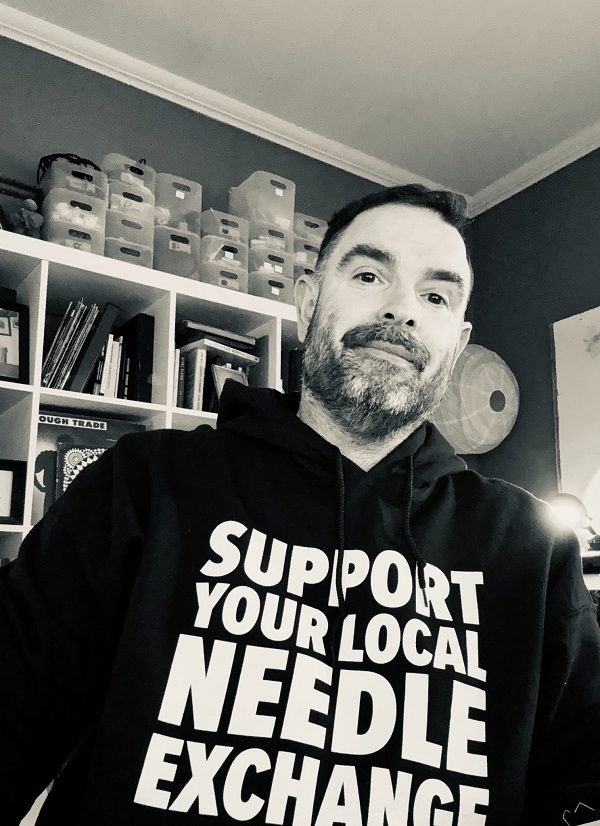 Shawn Syms is a bi, poly, neurodivergent writer and critic published in more than 50 different publications. His collection, Nothing Looks Familiar, was seized by the Michigan Department of Corrections because it could “facilitate or encourage criminal activity.” He’s working on an interconnected set of memoirs.