Interview by Jeffrey Canton
Sarah Ellis is one of Canada’s most celebrated children’s writers. She’s published a dozen novels for young readers, engaging picture books and books on writer’s craft. Ellis has won the Vicky Metcalf Award for Body of Work (1995), the B.C. Lieutenant Governor’s Award for Literary Excellence (2013), and received numerous other accolades. In this issue of Plenitude, I review her first book for adults, My Year in Fairyland: Grief, MAID and A Lifetime of Books.
Jeffrey Canton (JC): Fairyland is such a lovely memoir. It gives us a moving portrait of your wife, Sherry Burns, the dozen years you spent together, and her death via Medical Assistance in Dying (MAID) in Switzerland in 2019—but it tells us a lot about you personally as well.
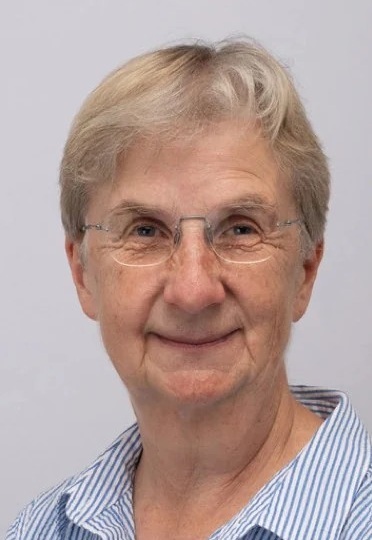 Sarah Ellis (SE): I’m kind of reluctant memoirist, and the memoirs that I like the most as a reader are ones that are about the person and something else, or even primarily something else. I’m thinking about H is for Hawk (the 2014 memoir by British naturalist Helen Macdonald), where there’s another focus but it’s kind of a way into a personal history.
JC: Was it hard to make that decision to be so honest? Because I know what a private person you are; we discussed the subject in 2000, in a piece I wrote for Toronto queer newspaper Xtra! called “Secret Garden.” I asked several children’s writers about their personal LGBTQ2S+ experience. At that historical moment, nobody in that group had written a book with any sort of LGBTQ2S+ focus. At that time, you said:
Well, isn’t this an interesting question… When adolescence hit, and all my previously sensible friends started going goofy and giggly over boys, I naturally assumed that they were obeying some rule that they had read in an issue of Seventeen that I had missed. It never occurred to me that they were wired differently from me… my take on the world was that you could not jump to any conclusions about what a person was like based on their outward appearance and behavior, that everyone was simply obeying the rules… I guess what it comes down to is secrets.
So here we are, 26 years later, and you’ve written a memoir that puts you out there very publicly as LGBTQ2S+, not only telling, of course, the story of your wife Sherry’s death, but also creating this beautiful portrait of the relationship that you had shared. But to do that you had to give us as readers a sense of yourself as LGBTQ2S+.
SE: Having just turned turning 70, there was a certain kind of freedom, a sort of feeling of, “Oh, good grief. Why am I being private about something that has been a part of me for so long!” I felt more confident about it. And I’m glad that I have lived this long. Because I’ve changed and the world has changed and I’m glad to see it all. Not about all the changes like the attacks on LGBTQ+ books for young readers, for example, but I’m glad to be here to observe see this world that was very different than the world I came out in and to try and make sense of it.
And that includes making sense of my life, the arc of my own life. Because before that, quite frankly, I was too busy. In those middle years. Bring a librarian and a writer and a book reviewer and all the other parts of my life. There wasn’t a lot of time and energy for reflection because you’ve got to do the stuff. All the stuff of making a living, taking care of other people and all those other things. And then, then you get to this different stage.
Telling Sherry’s story was important to me, too, because I needed to find a way to share both her life and her death and how it changed me.
JC: Was it very different writing Fairyland compared to your other books? I mean the novels. Did this require something different in terms of approach?
SE: It felt different. One thing had to do with the arc of the book because of what I wanted to accomplish. Telling the story of the relationship I shared with Sherry, her death and my grieving. I’m not that great on plot. Yeah. And so to be able to kind of leave that behind, at least as I was writing the book seemed easy enough. But in the editing process, I realised that, of course, it did need a narrative structure, but I wasn’t sort of intimidated by that at the beginning.
JC: I especially loved the chapter “Mock Orange Blossom,” about your wedding.
SE: One of the things that George Galt, the editor, was very good at was helping me decide on the order to put the 12 or 13 pieces I’d written. I was reluctant to make the book chronological, but he gently pushed me towards that. And as soon as I started to do think of Fairyland that way, I knew that was absolutely right. And then one of the advantages to that was that the wedding is a kind of fulcrum in a Shakespearean comedy. It’s the end, you know, the joyful end of a comedy. And it certainly had that quality, but then, on the other side of the wedding, was coming home from Fairyland. We got married in June and she died in September. It really was right at the end.
JC: How do see Fairyland now that it’s out in the world?
SE: I discovered some things about myself while writing it that I didn’t expect to discover I’m a writer, that’s what I do, that’s my work, that’s how I see the world, that’s how I sort stuff out. That’s how I make friends. That’s how I define myself. It’s just how I negotiate the world and knowing that I negotiate the world by writing about it. And I feel peaceful about that.
JC: Going back to our discussion of writing about your life as an LGBTQ2S+ person, would you now consider writing about LGBTQ2S+ characters in the books you write for young readers?
SE: I don’t know. When you asked me that question in 2000, I think I felt at that time that I would have been trying too obviously to be diverse and that wasn’t who I was as a writer. At the time. And that’s probably to do with my own shyness in a way.
We’re now at the point, at least in the worlds that you and I live in, and I’m fully aware that this is not true everywhere, but we’re really at the point where a gay character, can also just be wallpaper, you know?
And I think partly why I was able to write this book: it’s not a book about being gay. It’s not really a book about MAID either. It’s a book about grief and joy, being a writer, fairies and stories, playing. Surviving. And books, course. But I know that it was quite a journey to get to the point of being as confident as I am now so that I could write openly and honestly about myself and my life with and without Sherry.
As a writer for children, I’ve taken my inspiration for writing, especially for middle grade, from the day-to-day stuff of life. The quotidian stuff. And I just can’t figure out what kids do anymore. I mean, I know what they do. They’re on their devices and, intellectually, I can accept that that’s a rich life for them. But how do you write about someone who never goes outside?
I don’t feel that I have story ideas that involve children. But that doesn’t really bother me. There’s a whole new generation of young queer writers who are creating books for those kids! I haven’t stopped writing, but what I do next? Who knows!
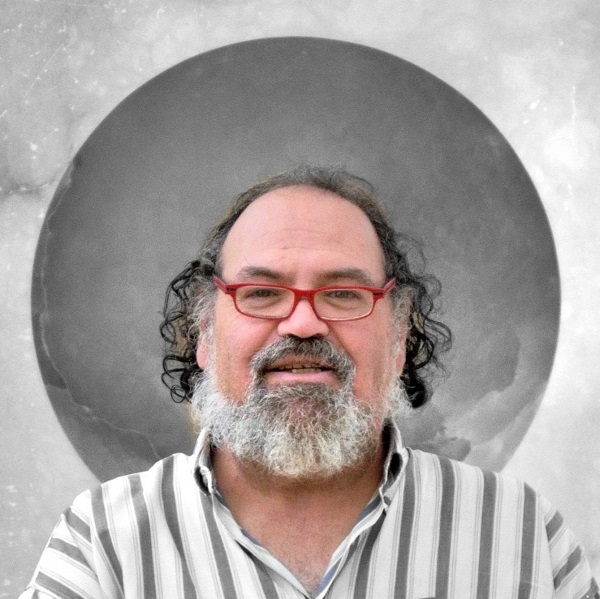 Jeffrey Canton began his freelance career interviewing queer writer Patrick Roscoe for Xtra! in 1990, writing features on LGBTQ2S+ creators including Makeda Silvera, Timothy Findley, Jeanette Winterson, Peter McGehee, and Doug Wilson, and later writing the newspaper’s “Between the Covers” column. He’s currently the Children’s Books columnist for The Globe and Mail.