 Reviewed by Jeffrey Canton
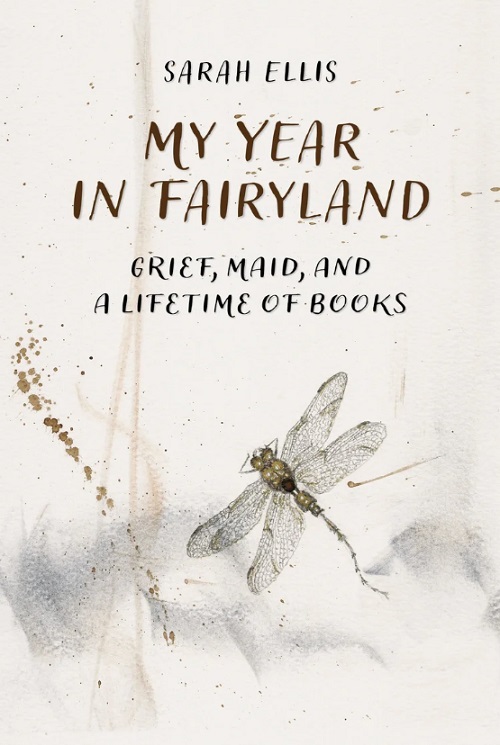
Sarah Ellis (illustrated by Libbie Bake), My Year in Fairyland: Grief, MAID, and A Lifetime of Books (Stonehewer Books, 2026) 140 pp., $22.95.
Sarah Ellis’s memoir, My Year in Fairyland: Grief, MAID, and A Lifetime of Books, is many things. It’s a chronicle of her relationship with her wife, Sherry Burns, and an accounting of Sherry’s choice to end her life through Medical Assistance in Dying (MAID) twelve years later in September 2019; it’s a book about grief and grieving; it’s a book about books and the power of reading, Ellis’s childhood and her lifelong fascination with fairies.
But perhaps what’s key to Fairyland is that it’s a book about a writer who suddenly finds herself unable to write and how she found her voice again, in part because, after 40 years of writing books for children and young adults, creating an array of memorable characters and telling their stories, it was actually time to tell her own. For a year, she was “lost in Fairyland,” and if she was ever going to make her way home, as she states in an interview accompanying this review:
“I finally accepted my subject. After 30-plus years of writing fiction, keeping that personal pronoun at bay, I realized that the homecoming story I needed to write was this, my own.”
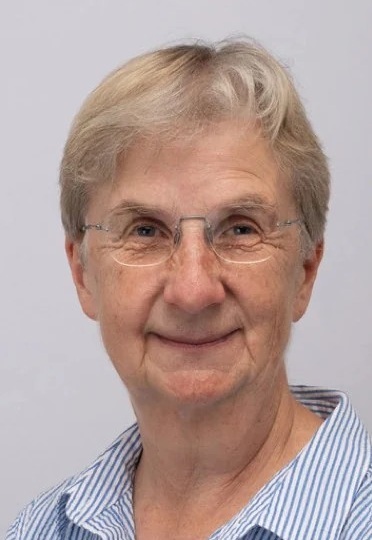 I’ve known Sarah Ellis for at least 26 years—in the fall of 2000, I featured Ellis in an article I wrote for the Toronto queer newspaper Xtra! called “Secret Gardens: The fertile origins of children’s lit.” Ellis was one of six writers for children and young adults who were all openly LGBTQ2S+, but none of whom had written books for young readers with any LGBTQ2S+ themes or characters. Ellis said at the time that for her “what it comes down to is secrets.” And while Ellis has always described herself as congenitally shy, we are offered the chance in Fairyland to see Ellis reveal her inner self on the page. As she tells us in Fairyland, “I needed to reveal my deepest feelings on the page. ‘Tell all the truth,’ advises poet Emily Dickinson, ‘but tell it slant.’”
It’s hard to describe exactly what Fairyland is about because Ellis leads us on a trek through her world that is unlike any memoir regarding the death of a loved one that I’ve ever encountered. Part of that is because Ellis isn’t afraid of showing us herself at her most vulnerable—a writer trying to make sense of life without the person she loved, lost for words for the first time in decades. There’s an openness here that is at one moment absolutely heartbreaking, devastating and hard to fathom and then it’s almost as if Ellis picks herself up, gives herself a shake and gets back up and delights us with some reference to one of the many children’s books that pepper the pages of this book.
It’s not that this is a confusing book. There are some clear very throughlines that we’re invited to follow—life with Sherry, this wonderful, almost larger-than-life partner who for a dozen years brought Ellis such great joy. We’re given access to some of the notable moments in their partnership, almost like a series of Polaroid snapshots of what their life together was like. Particularly memorable are their courtship and wedding! More difficult: watching the progression of Sherry’s multiple sclerosis, her decision to have a death by MAID, and the turmoil Ellis felt in trying to come to terms with Sherry’s decision.
There are also stories about Ellis’s childhood, her relationships with her parents and books, books, and more books. There’s a wonderful chapter about riddles, Odysseus’s homecoming, as well as skipping rope—play is a major theme throughout this book. One moment we’re soaking up Robert Louis Stevenson’s A Child’s Garden of Verses or Edgar Lear’s “The Owl and the Pussycat,” and next thing you know Ellis is chatting about Chaucer’s Parliament of Fowls or the eminent scholar Katharine Briggs and her masterful Dictionary of Fairies. And believe me when I tell you that Eleanor Farjeon’s Elsie Piddock Skips in her Sleep, which Ellis also discusses, is sublime.
After reading My Year in Fairyland, you will appreciate the richness of Ellis’s writing, delight in her erudition, and admire how beautifully constructed Fairyland is—make sure you read the section titled, “Works Consulted, Mentioned, Quoted, Enjoyed.” It’s well worth it!
The book takes you on a difficult but incredibly powerful journey. Death is something we all must confront—our own and the deaths of the people we most care about—and Ellis expresses this beautifully. Though I never had the chance to meet Sherry, she is so very present to you by the time you finish this book. And I urge you to take the time to savour the illustrations by visual artist and illustrator Libbie Bakes. They offer readers a helpful pause before Sarah Ellis takes your hand and leads you in and out of Fairyland.
My Year in Fairyland is unlike any book on grief and loss I’ve ever read. I can’t help thinking of the subtitle of J.R.R. Tolkien’s The Hobbit: “There and Back Again”; that sums up My Year in Fairyland perfectly.
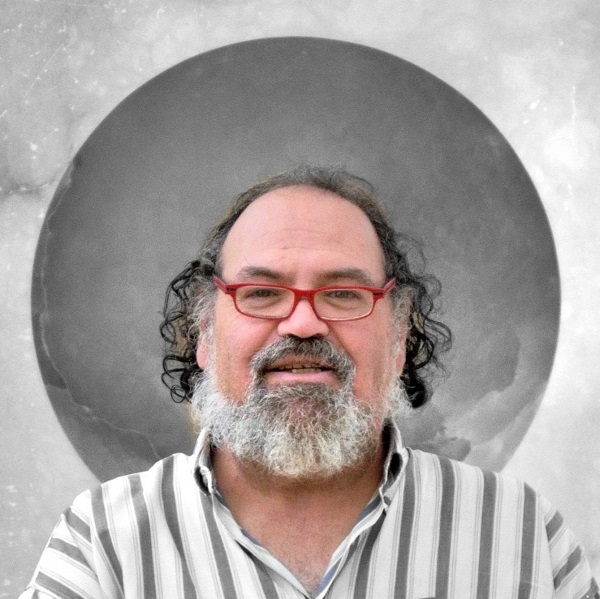 Jeffrey Canton began his freelance career interviewing queer writer Patrick Roscoe for Xtra! in 1990, writing features on LGBTQ2S+ creators including Makeda Silvera, Timothy Findley, Jeanette Winterson, Peter McGehee, and Doug Wilson, and later writing the newspaper’s “Between the Covers” column. He’s currently the Children’s Books columnist for The Globe and Mail.