Interview by Patrick Grace, managing editor
Plenitude Magazine’s 2026 Summer Poetry Contest is in full swing! With the September 21 deadline soon approaching, Plenitude’s managing editor Patrick Grace asked contest judge Misha Solomon a few questions about poetry as a queer art form; his debut collection, My Great-Grandfather Danced Ballet; and what he’s looking for in a winning entry.
One writer will win a $500 prize! Entries cost $15 each for up to three poems.
Click here for full contest details, and to submit your entry.
PG: What do you think of poetry as an art form, specifically as a means of expression for writers in the LGBTQ2S+ community?
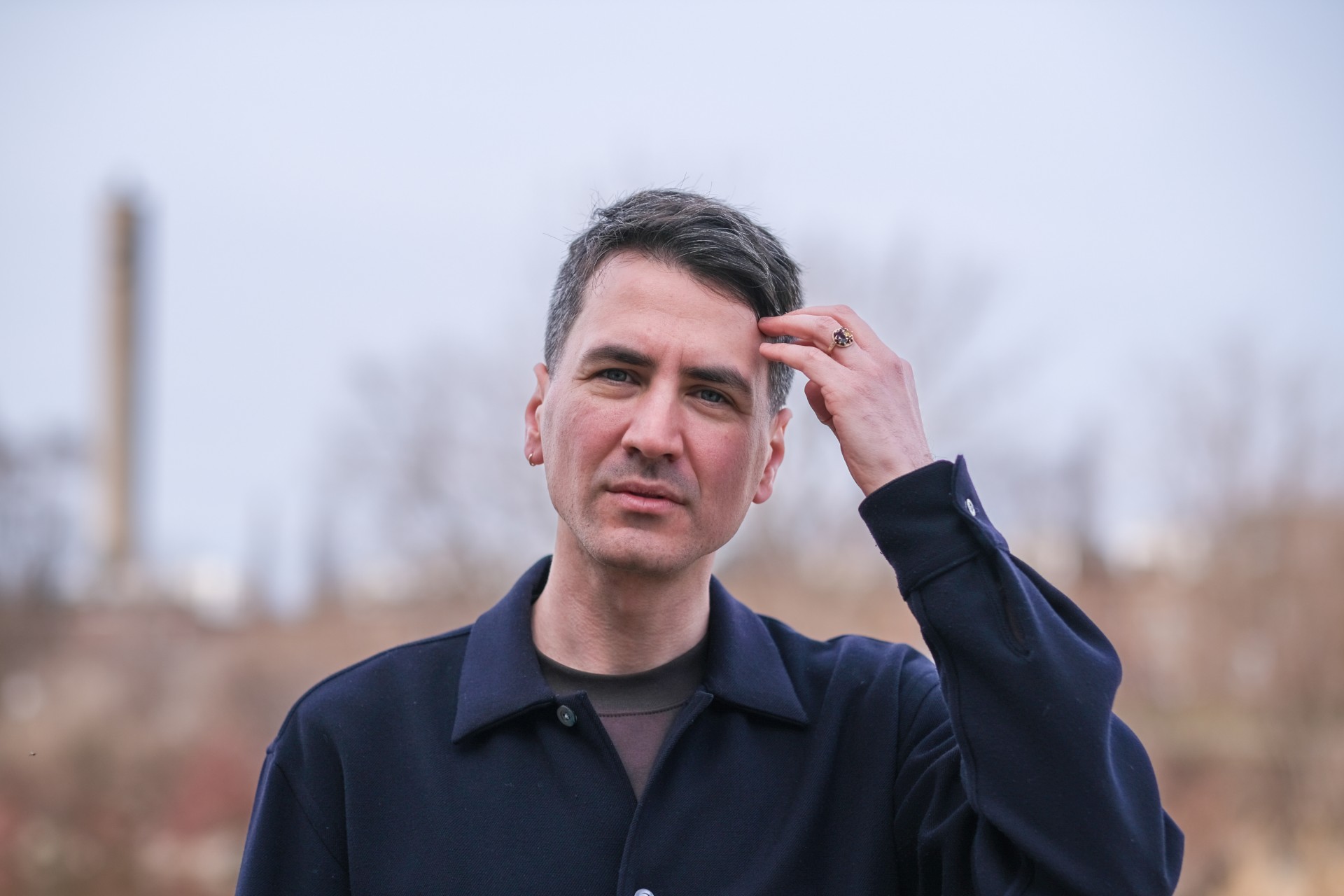 MS: Wow! Starting off with a bang! Far be it for me to speak for the community at large, but I think that poetry allows for fluidity, flexibility, and constant redefinition. For me, poetry involves applying structure to creativity and creativity to structure. I think those allowances and those applications might resonate for other 2SLGBTQ+ writers!
PG: Your debut poetry collection, My Great-Grandfather Danced Ballet (Brick Books, 2026), “entwines an alternate memoir of [your] great-grandfather in pre-Holocaust Romania with a contemporary gay life in Montreal.” Can you tell us about your inspiration to bring past and present together through poetry?
MS: In an interview I did with Andrew French for their wonderful Page Fright podcast recently, I talked about my enduring love for the TV show Lost, which plays with time in different ways across its six seasons. I’ve long been interested in the feeling of “time traveling,” not so much in the science fiction sense but in the sense of being able to access the past, or a past version of yourself, through different experiences. When it came to thinking about what shape my first book could take, I was drawn to the idea of braiding (or unbraiding) two timelines, and in thinking about what exists in the space between the threads.
PG: Recently, you published two poems, “Ernest Dances Siegfried in Swan Lake” and “We’re Sure,” in long con magazine, an online journal focused on ekphrastic literature. How does ekphrasis tie in to larger themes in your work? Did you learn anything new while writing these poems?
MS: The first poem, “Ernest Dances Siegfried in Swan Lake,” is central to My Great-Grandfather Danced Ballet, so I certainly had to learn a lot about ballet to write both the poem and the rest of the book. The Male Dancer: Bodies, Spectacle and Sexuality was a great resource, as were various videos of Swan Lake I found online.
I wrote the second poem, “We’re Sure,” in a workshop I took with Liz Howard at Concordia. It’s part of what I hope will become my second full-length collection, which explores the anecdote. I like to write about the art in my home and often weave pop cultural elements into my work, and so elements of ekphrasis certainly find their way into my poems.
PG: We’re very excited that you’ll be judging our very first Summer Poetry Contest! With an open theme, what makes a winning poem for you? Do you have any advice for potential entrants?
MS: I’ve thought a lot about what makes a “winning poem,” or at least a winning contest poem, and I can’t say that I have a good answer for you! I do want a poem to entertain me a little, to put on a bit of a show. Profundity, sadness, rage — they can all be entertaining within the right framework. My advice would be to send the poem you’re most excited about; that excitement will likely shine through.
PG: What can you tell us about your work as a creative consultant? Do you have any upcoming workshops or seminars?
MS: Before I went back to do my MA and began publishing more actively, I worked full-time in scripted TV, and I still consult in that world. I’m currently wrapping up the fourth edition of my “Is This Prompt About Me?” workshop, which isn’t quite a workshop, but a personalized prompt ~experience~. I’m not sure when I’ll do the next one, but it will probably be online, so if people are interested in hearing more about it (each participant gets four personalized prompts over the course of the six-week experience), they can email me at misha.solomon@gmail.com
PG: Do you have any book suggestions to share, or any authors’ works that you’re excited about in 2026?
MS: I always recommend that people read Frank O’Hara; start with Lunch Poems if you’ve never read his work. Lately I have mostly been reading about gibbons for part of my PhD work — The Gibbons: New Perspectives on Small Ape Socioecology and Population Biology is a great resource if you want to learn more about the lesser apes ;).
I’m excited about my publisher Brick Books’ fall releases from Jody Chan, Tyler Pennock, and Avis Blackbird, and for my friend Sophia Cirignano’s new chapbook Baked Pears from Baseline! And I’m about to dive into Bronwen Tate and John Vigna’s Practical Guide to Teaching Creative Writing, about which I’ve heard only great things!
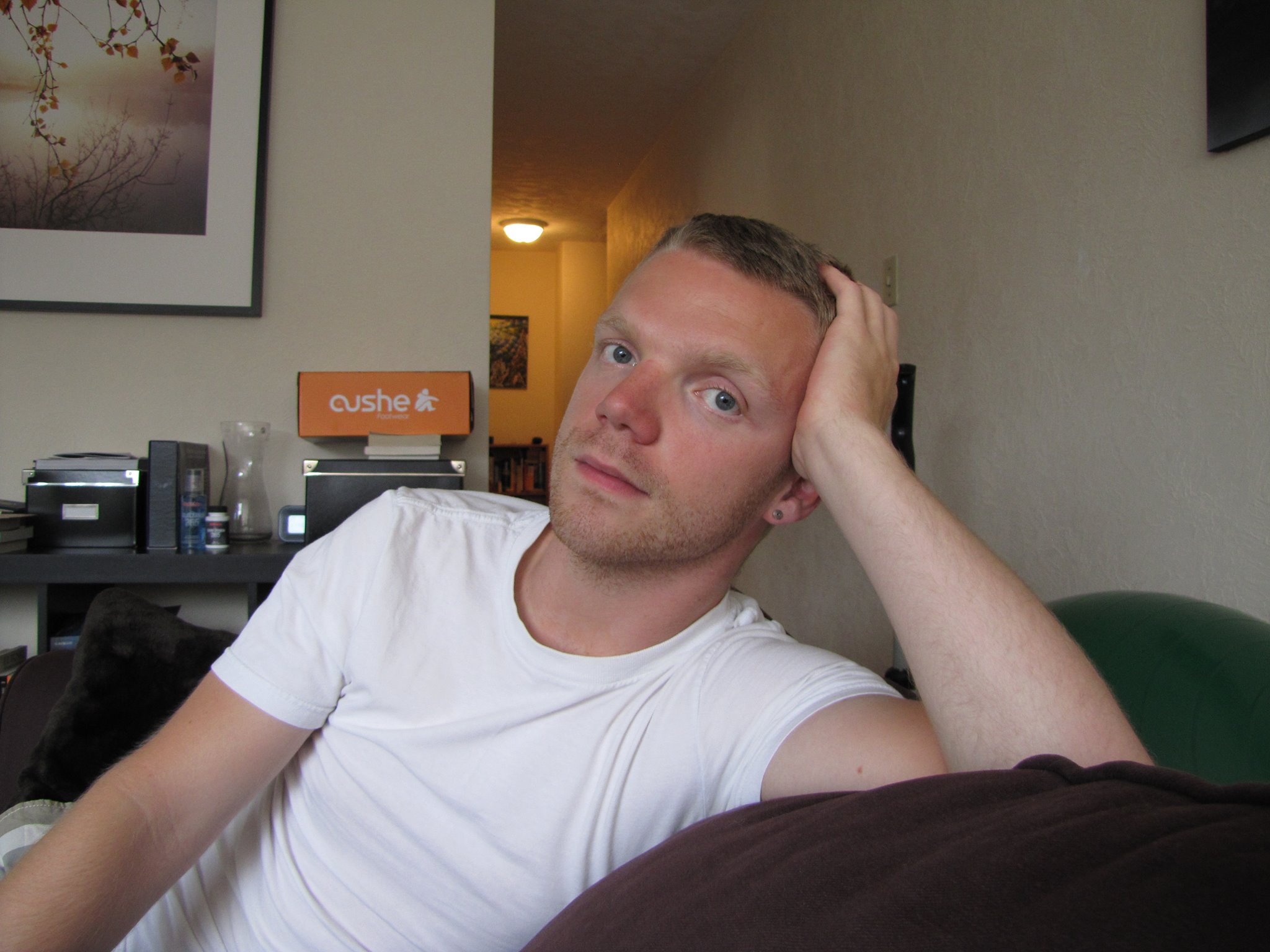 Patrick Grace is a queer writer and teacher who lives in rural British Columbia. He has published two chapbooks: Dastardly (Anstruther Press, 2021), and a blurred wind swirls back for you (Turret House Press, 2023). His debut poetry collection, Deviant (University of Alberta Press, 2024), was a finalist for the 2025 Robert Kroetch Award for Poetry. New writing appears in The Malahat Review and is forthcoming in The Fiddlehead.