He thought forever would be like time going missing driving at night, but it turns out it’s more like a snow globe. It’s shaken and swirling, too much of a whiteout to follow the highway lines of time.
He does know the start. It was static then, and maybe it will be again in the end. But since his head hit the parking lot pavement and the steel-toed boots hit his ribs, things have been jumbled.
Maybe before that, with the drinks he downed earlier on that last night. Or even earlier, after high school. He moved straight to the city. Toughed it out under a sky sliced up by buildings for almost a year, then wound up back in the town where he started. The in-between.
He didn’t want to be there again, but it seemed that everywhere with enough sky for his heart to open up was someplace like nowhere.
The more he thinks about it, the more he’s sure things were jumbled a long while before he died.
He knows forever starts at a bar in a town best described as a grain elevator and a gas station between two more-important places, and they wouldn’t have to be all that important. He was twenty. The year was nineteen-something, too early to think seriously about millennia like he does now.
It was karaoke night, which he attended the way other people in the town attended church. He’d had enough drinks to pick Queen’s “Somebody to Love.” Enough drinks for his impression of Freddie Mercury’s movement to be a little too spot-on. He knew better. There were safer bets. He sang a yearning song by a gay icon and did the camp of that icon, so of course the rumours of who he loved were on the top of people’s minds.
True rumours. He was only interested in other men. Though he wasn’t always sure about being labeled as a man too.
Trouble came from an old classmate who was equal parts scrappy and scraggly. The classmate spat at the stage and called the singer and Mercury both a word they were only allowed to use for themselves.
The singer still had the microphone in his hand. He called some names back, targeted and cutting like you can only do to someone you grew up two desks over from. Then he threw the microphone like a fastball.
Chipped tooth. Fists falling. Spilled drinks and shattered glass. The bartender tossed the two of them out. Wasn’t that always how it was? The singer was too big for this place, but he kept coming back because it was the only place the sky was big enough for him.
Under the stars in the parking lot, people picked sides, and no one picked his. So he went down. As his head hit the pavement, he thought about how it’s not even a good song for karaoke. Should have picked ABBA. By the time the steel-toed boots were done and he was left there, the snow globe of everything was shaking. He crawled under the scant shelter of the bar’s metal back door as heavy flakes came down.
Tonight is definitely decades later. He’s seen what feels like a thousand years forward and back, and he knows right about where he is based on the level of deterioration behind the boarded windows. With a scrape and a rush of warm night air, someone pushes the front door of the bar open.
And right away, he feels this could be what he’s been waiting for.
This might be the end.
◊ ◊ ◊
I’m going to tell them tonight.
It’s grown so big in my head since I first found it a couple years ago, sometimes I swear I don’t think about anything else. I’m scared because it’s tender in me. Half-formed and nebulous, but still a sure thing. It’s just Cole and Alyssa and Evan and Sydney though. They’re alright.
We’re standing around a bonfire of old pallets behind Evan’s parents’ house. The back acres bleed into the treelines around my dad’s cropland. We’ve all been hiding and seeking back here since we were kids, but I’ve just found them now. I slipped in with these four friends in the dead June weeks of school. Got rescued, it felt like. The years before had stretched lonely. And now, uncertainly, I think I’m adopted into the group.
The lie of this place is that some things never change.
But we all start to believe it. It becomes a necessity. Because you’re lonely, and hoping hurts worse. Or because it’s the summer before the summer after graduation, and we’re white-knuckling ideas of our futures that are slippery, just out of reach. We need this place to never change just in case our big plans of leaving fall through or turn up empty. We need a home to come back to.
I don’t say these thoughts. Can’t go being too strange and contemplative and raising eyebrows from the people I’m hoping give my last year of high school a feeling like belonging.
As the fire dims down, Evan asks, “What now?”
The answer to this question is always the same. Though we don’t live under a rock and we know the fossil fuels are almost gone, even if some of our parents make jokes about “global warming” every cold day.
Instead of everything else, I say, “Let’s go for a drive.”
◊ ◊ ◊
One time the door opened, and this was before the bar closed for good, and it was that same ex-classmate. Much older now, stretched and bored. He sat too close to a woman who the karaoke singer used to know. The singer had sat with her under bleachers, maybe. It seemed like what they would have done. Sat under bleachers and said, I don’ t think I want to date the people I’m supposed to. And, Me neither.
He liked to sit on the old karaoke machine. It’d died and no one had replaced it, so no one bothered with that corner or could see him, not if he minded his business. He had been, as far as he could remember. But the guy wouldn’t leave the woman alone, and he kept drinking and drinking, and she didn’t mince words with him, and on the karaoke machine, the long-ago singer remembered how it’d gone when he’d talked to this particular man like that.
This little dance. The guy went to the bathroom. The woman settled up, and the barkeeper went to take a smoke. That wasn’t allowed inside anymore. The woman ran into the guy, who grabbed her arm and pushed her into a shadowy back corner where the payphone still worked.
Things were jumbled, but this was clear to the singer. Not here, not to her, not on his watch. He slotted a song into the karaoke machine and hopped down. A bass line from a speaker that shouldn’t play anymore.
It went ba-da dum, dum, dum.
“Another One Bites the Dust.”
◊ ◊ ◊
The dark smoke in the rearview mirror is like an unheeded signal as we head toward town, the five of us wedged into Alyssa’s old Mustang. I like the idea that we could make our own escape.
“How’d you afford this?” asks Sydney from the centre of the backseat. She looked at Evan and I, both of us gangly, and took that spot without question.
“Well, it’s not safetied,” says Alyssa. “My dad says it’s just for night and the grid roads for now. Until we fix it up.”
Cole cranks down the passenger seat window. “Doesn’t mean it’s not safe, right?”
Evan kicks the back of Alyssa’s seat. “Nothing with this one at the wheel is safe.”
“To answer your question,” continues Alyssa, ignoring Evan, “it all depends how you define ‘safe.’”
Cole undoes his seatbelt so he can stick his legs out the window. “Whenever I’m with all of you, that’s how I define it.”
“Aww,” mocks Sydney.
Cole imitates it back at her. The two of them are always like that, so it’s only a matter of time. Before the summer runs out, I bet.
But I let Cole’s words settle in my chest. I’m safe with these people. I can say, Hey, I’m not a guy. I’ve never been. I think (though I know) I’m more like genderqueer or nonbinary, something like that, but shifting around day to day, week to week. Just plain am. Every time someone says “he” and means me, I feel like I’m outside my skin watching myself. If I told them, Evan might ask if I’m gay or straight, and I’d have trouble answering because which words about who I’m attracted to sort of depends on where my gender is at in any given moment. The words matter less to me. They’re more for other people.
They won’t hate me. They’re not that way. Some people at school are, though. Some teachers, and students who go to particular churches. Most of the worst are parents, making genderqueer out here a tricky path. It’s not quite one of those wonderful places where coming out is a thing of the past.
I get used to being scared, and then I wonder if maybe I’m not as solid with these four as I think. That if I tell them, somehow things will change, and I’ll wind up on the outside again. Or word will get back to my parents from someone like Mr. Kent who outed one of his students to her parents. And just because a government says conversion therapy is banned somewhere doesn’t mean it’s not still happening in church basements.
“Truth or Dare,” says Sydney. To Cole, of course.
“Truth.”
And it’s Fuck, Marry, Kill—three celebrities. I think Cole tries to pick in a way Sydney would prefer he does.
Then Alyssa drives with her eyes closed for ten seconds.
Then Evan tells us his dream job, and it’s owning an ice cream truck. If those still exist. He’s sweeter than you’d think, Evan.
Then me, right as we hit the edge of town. Evan says, “Truth or Dare.”
I’m going to tell them tonight. I really am. “Dare.”
“Spend three minutes in the haunted bar,” says Evan.
Cole whoops and Alyssa swerves sharply to take me to my fate.
◊ ◊ ◊
The radio kept working after the bar closed. Machines have been that way for him since he died. So he listened and he wondered why the hell he was still there. That was the deal, right? You’re either dead-dead or you’ve got some unresolved business. But what business could he have other than vengeance on the person who left his soul stuck in this building?
He screamed some then. Into the past, into the future, while the radio played.
That was how he heard about the teacher. On some Bible-thumping radio show that came on sometimes. And this teacher, this fucking man, talked about how “teachers have a responsibility to parents” and “family values” and “parental rights.” Like children were property. Like you’ve got to turn eighteen to start having human rights. No shame. On the air, he flaunted how he’d ratted out kids. His students. Because this man had never been unsafe once in his life, and he couldn’t imagine the torment he threw these students into.
So the singer watched from the windows. And every time this teacher walked past the boarded-up bar on his way to school, the singer played a different song, faint, so the teacher could just barely hear it. Until the singer figured out what got the teacher’s attention. Then that got played every time.
The teacher started to stop to try to peek through the cracks between boards. Probably thought about calling the cops in case people were camped in the abandoned bar, because a man like that has pretty set ideas about who deserves shelter.
One perfect day, the teacher came around to the door. From the inside, the singer clicked the lock open before him, locked it behind him.
People must have heard the screaming for the next couple days. The singer wasn’t trying to be cruel. Time was different for him, and he just lost track and forgot to finish the teacher off. Not that the singer was upset about it.
The police didn’t look that hard. He did his best haunting impression. Campy and overblown, like Freddie Mercury, and the cops didn’t like being scared of something they couldn’t put a bullet in.
Ending the teacher wasn’t the end either. Some unresolved thing still kept the singer restless within the molding walls of the bar.
◊ ◊ ◊
The bar’s been closed as long as I can remember. This town was born in decay, the way my grandparents must once have been young but have never been to me. Like driving, the bar is forever.
The five of us stand between Alyssa’s car and the building that, even at only two storeys, somehow looms over me.
Two stories.
The dare’s less funny with the dark outline of the bar in front of us. No one has to repeat the stories now. They’re looping in our minds anyway. Mine most of all. I should have said Truth.
It closed in what I think was the early 2000s, before I was aware or around. People had died there before—a parking lot fight, a heart attack, an accidental OD in the upstairs rooms—but Dean Brandt’s death was different. He was found in the morning with the microphone stand from the old karaoke setup driven clean through his skull and into the payphone behind him. It’d been broken in half to make a jagged pole. No one who could be linked to the scene could have done something like that, and there were no new prints on the microphone stand.
The barkeeper tried to stay open, but he said all the corners got too dark, all the sounds too loud. He closed shop. Closed casket funeral for Dean.
“It’s probably locked up anyway,” says Sydney. “After the police looked for Mr. Kent.”
“Yeah, I’ll dare you something else,” says Evan.
Mr. Kent went missing two years ago. He was never my teacher, thank god. A self-righteous creep no one knew whether to pretend to grieve or to assume skipped town.
The sounds of anguish from inside the bar after he disappeared were different from the other clanking and mysterious music and shadows in the windows. A bunch of people heard and agreed, so the police investigated.
Cole’s ex-girlfriend’s dad is a cop. Cole says he never talked about the day they investigated Mr. Kent’s disappearance except once when Cole bothered him for a ghost story around the campfire. And then, when he told it, it was low and serious with no extra drama. How every time they left the main room, the karaoke machine played on its own, but when they came back, it wasn’t even plugged in. Screams in closed rooms that were empty when they broke down the doors. That was as far as he got. He asked who wanted marshmallows and went inside to get them. He stayed there for a long time, said Cole.
“Let’s leave that place be.” Cole gestures back toward the car. “Heard there’s asbestos in there.”
Nope, I’m in it now, no backing out. Not in front of my four favourite people I’m just getting to know.
I shrug. “It’s only three minutes.”
I walk from the safety of the group to the old doors. I swear, as I reach for the doorknob, I hear it unlock for me.
◊ ◊ ◊
The singer doesn’t unlock the door for just anyone. Most, he lets bang at it and turn away frustrated. Others he lets in and gives material for rumours. One never left. This person now gets welcomed in like a guest.
With a scrape and a rush of warm night air, the person pushes the door open. For a moment, they’re framed by the doorway, an old car and some friends in the dim distance behind them, then the door swings shut.
For the only time since he died, someone reminds the singer of himself. This person, who’s maybe sixteen, looks around the room with wide eyes. Taking things in. They’re scared of this place. The singer has long since made certain of that. But they carried in a fear too.
They’re counting to themselves softly, one hundred eighty downward. Instead of staying near escape, they step inward, approaching the karaoke machine caught in faint slants of streetlights between the boarded windows. They touch it with reverence, running their fingers inches from where the singer rests, ethereal.
That’s why this person reminds him of himself. They seem like they’re barely in their body at all.
They go sit on one of the tall, cracked stools at the bar and stop counting. Softly, they rest their forehead on their arms. The singer wants to do something. To put an arm around their shoulders or strike someone down for them. To play the perfect song that will heal whatever this is.
He wanders over and lets his hand brush across the glasses hanging upside down, tinkling them like a windchime. They raise their head, and they see the singer standing behind the bar.
What did the angel say when it appeared in a flurry of wings and eyes? Some foolish thing.
“I can’t tell you not to be afraid,” the singer says.
◊ ◊ ◊
I clench the metal bar at the edge of the counter to stop myself falling over.
From nothing, a figure. Frozen blue skin with icy blood cascading from a wound on the side of his head. Blackened fingertips and a torn shirt, like a nightmare from under the ice. Chilling air pours off him in waves. His voice is pure and clear and close. Closer as he leaps toward me, vaulting onto the bar.
I’m the third person. The next haunting. The screams with the source that will never be found.
The figure settles close to me, sitting facing me from on the bar, like he’s on a kitchen counter for a late-night conversation we drifted into.
I swallow, unable to move.
“So,” he asks, “what are you doing here?” My brain processes it as a threat, then has to process it again because the tone is friendly.
“Dare,” I manage.
“Makes sense. I do my best.” He glances over at the karaoke machine, and a song comes on. Only music, no words. Piano-ballad calming. “I didn’t mean here-here, though, I meant in this town.”
I take a deep, shaky breath. “I’m not done high school.”
“That’s what you think, but the sky always brings you back. It calls and calls. Hard to know what to do with a place you love that doesn’t love you back, right? Some part of you is always there and never gets out.”
He says those words like he’s looking right through me, even though it’s me who can see through him to the dusty bottles at the back of the bar. It should terrify me. Instead, his eyes on me ground me and give me my words back.
“Is that why you’re here?”
“It’s why I came back. This bar… I died here, I suppose. Some guys beat me to death. Or maybe I froze. Died, anyway.”
“What about the other people who died here?”
“Oh, like that teacher and Dean? I don’t know. They didn’t stick around. Guess they didn’t have a reason to. Apparently, I do.”
I should know better than to ask more. “What is it?”
The ghost rolls his eyes upward and sighs dramatically. It’s so casual from such a terrifying figure that it almost makes me laugh. “You tell me. I rattle around, look out for the other queer people. I can’t exactly march or advocate or sign petitions, so, you know.”
“I don’t.”
“I kill people.”
So why am I shaking less and less?
He says, “That’s the way I’ve got of carving out space. Hope you’ve got something better than dying and haunting. I’ll bet you do. I’ll bet you’ve got better words for how you live in yourself than I ever did. Whatever yours are, I think mine would have been about the same.”
“How can you tell?”
“Where I am, when I am, it’s open country. It’s fields of time. I’ve seen a long, long way in every direction.”
“Could you tell me something?”
“Sure! If that’d help whatever’s going on with you.”
These words never leave here, and the way this figure sits and talks and sees right through me makes them easy to put into the air. “It’s only a couple minutes from now. I want to tell the people outside who I am and how to call me the right words and to be more in my body for the last year of school. I want to know if it’ll be alright.”
He’s quiet for so long I almost start counting again.
Finally, he says, “I can’t tell you not to be afraid. But I’ve seen further forward than you can imagine. And I can tell you things keep getting better. I know that’s impossible to hold in you most of the time. It’ll be a thousand steps forward and nine hundred ninety-nine back. So it’s not right away, not for me, but it will be. That’s what I know.”
It’s so cold near him that each tear freezes part way down my face.
Behind me, there’s a crash as the door to the bar gets kicked open. I spin around and see Evan in the doorway, the others close behind. “Fuck, you had us worried! What kind of three minutes was that? We thought we heard music—”
“—You thought you heard music,” Alyssa chimes in, and I realize it’s stopped playing. “Come on, let’s get you out of here.”
“I lost track of the time.” The figure’s already gone. The air isn’t cold anymore. It feels emptier than before, the opposite of me.
I jump down from the barstool and join them. Cole slams the door behind us. “Thanks for coming to get me,” I say.
“Of course,” says Sydney. “Of course.”
As we pile back into the car, I know next round, I’m picking Truth.
◊ ◊ ◊
In the forward and backward of it all, things point in toward this. That was what the singer had to do. Not just vengeance and protection. He needed to sit on the edge of the bar and tell someone like him that he knew enough to know it wouldn’t always be like this. He had to be how he would have been if he’d managed to stick around.
But they will. He’s pretty sure of it.
Inside the snow globe, the flakes are settling down.
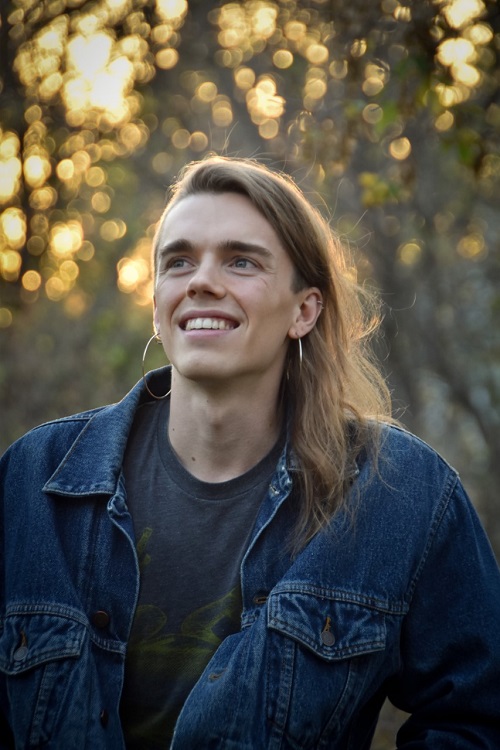 Cale Plett is a nonbinary writer who lives in Winnipeg, Manitoba. Wavelength, a runaway pop star YA romance, is their debut novel from Groundwood Books. Their second YA novel, The Saw Mouth, is coming out May 12, 2026 from Delacorte Press, to be followed by another standalone YA horror novel, Stranglehold, in fall 2027. Follow @caleplett on Instagram for all things writing.