A month into my second year of university, something attaches itself to my thoughts.
I am lying in bed in the blue October night when I am suddenly stricken with the knowledge that I am not good. That I will never be good. That to continue to sustain my existence is unjustifiable.
It’s just me and the thought in the dark. The thought isn’t me but it’s in me, a second pulse. I want to scream and break furniture, to claw my way out of my airless body, but there is nowhere else to go. The thought watches, both from a distance and from inside my own mind. I don’t know if it’s God, or a spirit, or my conscience. I just know it’s right.
I wonder if I’ve killed someone and hidden the memory; if being able to ask this question is proof I already know the answer. Or is the thought’s icy needle the awareness that I will harm someone—the knowledge of this capacity, or desire, or inevitability? As passing headlights stain the ceiling, I think of the resources I subtract from the world while others starve, my organs beating inside me as strangers die on transplant waiting lists. My life has been tantamount to murder all along.
For the next five weeks, the thought crowds out all others. It crowds out the quiet where I wouldn’t think at all. I cry through the nights, through my classes, into my dining hall noodles. When my parents ask what’s wrong, I say I’m worried about exams. When my girlfriend asks, I say the same. I think of the thought leaking out of me, sticky as oil, violent, obscene. If I have brought the thought into the world, the least I can do is keep it contained.
I don’t have words for what I am hiding, but as we sit on the bed where I haven’t been sleeping, I know I have deceived and protected her by the way she touches my hand. “Anxiety,” she says. “That’s common for students.” It’s true I can’t concentrate enough to study. It feels evil to think about school when I shouldn’t exist.
I don’t want to think the thought, but it also seems wrong to stop thinking it. The thought is epiphany. It is fact. I have stared into it like the sun.
I am aware I am showing symptoms of mental illness. I am also aware this does not in itself prove the thought untrue.
◊ ◊ ◊
In 2015, after fifteen years of grinding and polishing mussel shells, Toronto sculptor Gillian Genser is diagnosed with mercury, lead, and arsenic poisoning.
Her diagnosis follows a decade and a half devoted to sculpting the biblical Adam. Genser begins crafting him after completing a sculpture of Lilith, whose smooth golden body she had formed from gilded ostrich and emu eggs. I like that Genser created a woman first, then Adam, no rib nonsense: a biblical re-origin story.
Adam’s fourteen-inch figure is painstakingly detailed, amassed from the remnants of fragile ecosystems. Sea worms and sea sponges, a beaver’s cochlea. Day after day, Genser crouches at her microscope, carves and adorn his removable organs, threading silver capillaries through pebbles, bone, insect carapaces.
Adam’s primary component is mussel shells. For hours a day, Genser grinds through calcite and nacre, smoothing the shell-dust into place so his skin grows dark and sinuous. Deep blue striations interlock to ripple the possibilities of movement. It was a lovely pun to make his muscles out of mussels.1
Between her pliers, fragments of earth and animal ripen into lungs, heart, trachea, brain. Intestines. Spleen? Kidneys? As I stare through my screen into the dark in his body, I realize how little I know my own insides.
◊ ◊ ◊
When I was fifteen, changing schools after a suicide attempt, I met another girl who had transferred for the same reason.
Maybe attempt is a strong word. Gesture was the term the nurse used at the hospital, where I sat on the stiff bed’s crinkled paper until my dad drove us home in grey sunrise. Impulse.
I remember the curl in her lip as she examined my scabby wrist. How she asked me four times if I’d taken any drugs, shining a flashlight into my pupils. I feel like people can read my thoughts, I said, and she made the same expression, which seemed fair because I was lying. Or rather, I didn’t have words for what I meant.
I wanted to say that I had no privacy. That I had the top grades in Bible class, but 99% still meant an error. That I felt God constantly, beaming right into me like her flashlight, scrutinizing my skull from inside. That I had no real self because even my thoughts were performed for an audience.
She touched my neck. Abrasions, she said to someone who typed it in a computer, and I was surprised, because by that point nothing really hurt.
On the way home, my dad bought us French fries at an all-night diner and said I could talk to him, and then we never talked about it again.
“My parents wanted to put me on antidepressants,” bragged my classmate as we hid in the bushes during gym, doodling on our knockoff Doc Martens while the other students ran laps, “but I refused. Those things change your personality.”
Sour electricity pulsed through me, quickly smothered by petty superiority. None of the specialists the school had referred me to had taken me seriously enough to try to put me on medication—but if they had, I would have accepted. If this girl was really so depressed, why would she think her personality was so great?
(What are your classmates saying to you? the therapist or doctor or whatever had asked, my parents seated outside her door.
Just stupid stuff. She waited. Like, do you like boys.
Well, do you like boys?
I laughed. She smiled.
Why don’t you tell them, “I do like boys, I just don’t like that one?”)
Years later, five weeks deep in the thought-that-won’t-leave, I climb the stairs to the university clinic, feel a damp flicker of pride when the secretary announces me down the hall as “an extremely distressed young woman.”
If something is medically wrong with me, it can be medically repaired. And if something is morally, existentially wrong, maybe a chemical change is still a chance at a solution. A way to transform myself into a person who can live in the world.
I want to put something in my body and have it change me.
◊ ◊ ◊
Genser salvages and sculpts, gathers a body out of shells and skulls, opals and exoskeletons. Delicate instruments rivulet silver into filigree reminiscent of chain link, mycelia, strands of light braided through moving water. Networks of veins bind Adam together. In the folds of his organs, droplet-sized jewels glisten like ichor.
She digs through buckets of common blue mussels, sifting for those with interesting shapes, favoring shells that have healed over fractures. She cooks mussels for dinner a few times a week, serves them to her family and friends. At a desk crowded with coral and bone, Genser sands down shells for up to twelve hours a day, blue dust gathering in the vents of her studio.2 The thinnest particulates drift through her skin.3
Common blue mussels feed by filtering water. Nestled in bunches, they hang like black tulips, pump the Atlantic through their pale bivalve flesh. What doesn’t pass through their bodies becomes their bodies, or hardens in their shells.
On YouTube, I watch a mussel farmer drag up a rope heavy with mollusks. They seem more plant than animal, their wet petals massed in clumps. Their blood is colourless, indistinct from the element that immerses them.
Within her first months working on Adam, Genser develops insomnia. A constant agitation writhes beneath her skin, and she sometimes vomits inexplicably. When doctors ask about possible toxins in her work environment, she tells them that she only uses natural materials.
The doctors prescribe antidepressants, then antipsychotics.4
◊ ◊ ◊
“The thought is in me,” I tell the university psychiatrist. “But it’s not my thought. It’s like something else put it there.”
He asks more questions. I clarify it’s not a voice. That it feels like God, but I don’t literally believe another entity is speaking to me. Apparently, the difference between psychosis and obsession is the difference between metaphor and simile. He rules out schizophrenia and bipolar, diagnoses me with depression and obsessive-compulsive disorder.
I’m thrown. I don’t scrub my hands raw or triple-check locks. My room is a whirlpool of dirty clothes and uncheckmarked to-do lists. A condition associated with being too organized is the furthest thing from what I expected.
But the defining feature of OCD, he tells me, isn’t outwardly visible—it’s the distress caused by intrusive thoughts. The thoughts can be violent, sexually disturbing, sacrilegious, unethical. Thoughts that do not feel like yours, that enter your mind and will not leave.
The conviction that I have done (will do, am doing) something unforgivable qualifies. In retrospect, I realize it’s not the first thought that does. I remember the years I’d been terrified of committing mental blasphemy, convinced my mind might cause God to kill me or my family. I remember how as a child I would clamp my mouth shut, afraid a torrent of obscenity would pour out against my will, or at the will of some secret part of me. I remember the fear that this obscenity was my truest self.
I begin to see the latest thought not as a new phenomenon but simply the most recent permutation of a sense of corruption stretching back too far to pinpoint its genesis.
Since adolescence, I’d turned to poetry to understand myself. I saw my mind in Siken’s crushing urgency, in the braided shadows of Plath’s lines as they loomed and pooled. Now medicalization unlocks new words, a new epistemology, a new wardrobe of archetypes. The promise of answers.
Harm OCD. Existential OCD. Scrupulosity. Metaphysical contamination.
In “The Language of Birds,” Richard Siken writes:
A man had two birds in his head—not in his throat,
not in his chest—and the birds would sing all day nev-
er stopping. The man thought to himself, One of these
birds is not my bird. The birds agreed.5
◊ ◊ ◊
In Blackfishing the IUD,6 Caren Beilin describes the trajectory of her rheumatoid arthritis, an autoimmune disease she attributes to the insertion of a copper intrauterine coil. The book incorporates text from numerous other women,7 gleaned from emails and forum posts, who believe the devices leeched copper into their bodies, causing mental and physical illnesses. Though their symptoms destabilize any clean division between these two domains.
The women describe swelled joints, lethargy, abdominal pain, sudden autoimmune diseases. Personality changes. Obsessive thoughts of suicide. Some report an unshakeable conviction that they are evil people, that they are fated to do something awful. Some report a sense of moral obligation to end their lives before this comes to pass.
For some, their symptoms desist upon removal of the device. For others, the pain remains. Arthritis continues to brittle and swell Beilin’s fingers as she types up her manuscript.
Blackfishing the IUD is a difficult read. It’s hard to bear witness to the suffering others hold in their bodies. An unkind part of me twitches toward doubt—how many of these women might have had underlying health issues beforehand? Do we seek a clear narrative of cause and effect to avoid accepting that, sometimes, people just get sick?
But who is the we? And even as I think these judgments, my discomfort originates in my body. In the pulse of blood itching in my wrists as I read. In the urge to pace. In the heat rising under my skin as I pluck out the hairs of my eyebrows one by one.
I’ve never had an IUD. But if contamination made these women think like I do, what infiltration might I harbour inside? Which of my thoughts are real? Which of the birds is mine?8
◊ ◊ ◊
As a teenager, I read a book in which a child, raised by a single mother, longs to know the father he’s never met. He locks himself in the washroom and scrutinizes his face in the mirror, subtracting every feature he shares with his mother. What is left, he reasons, will form the other half of his origin.
Late at night, I dredge the depths of JSTOR and Google Scholar, pulling up articles about OCD, aware this might itself be compulsive. I pore over case studies and diagnostic criteria, scroll into sunrise, convinced once I pinpoint the sick threads of thought, I can extract them. What remains will be my true nature.
Morning arrives. I still can’t put a face together.
◊ ◊ ◊
Months and years pass; Genser continues her work on Adam. She burnishes shells down to violet-black powder, bending the dust into luminous dark. Lovingly, she fills the cavity of his chest, guides each organ into place.
She loses hearing, loses weight, loses the ability to recognize her family.9 She visits a never-ending assortment of specialists—neurologists, rheumatologists, endocrinologists,10 all of whom send her back with no answers to the home where her husband is afraid he will find her dead. Her hands cramp, muscles ache, body freezes; she slurs her words, loses memory, space. Up becomes down, left and right swap places. She speaks of how her life is over, wants to finish the sculpture before she dies. When her husband has to leave the house, friends stay over so she won’t be left alone.
This goes on for fifteen years.
Then, one day, in the Royal Ontario Museum, she meets a specialist in invertebrates, who speaks of how their shells and bones gather toxins. She conducts research: common blue mussels are filter feeders.11
Finally, after years of appointments, she is diagnosed with heavy metal poisoning from factory runoff into mussel beds.12
Genser had intended Adam as biblical critique: The words that man has dominion over the animals—that was a destructive view. It gave us ownership, like it’s all there for us. Instead of saying,‘this whole world is something we’re part of.’13
Genser and Adam have become part of each other. She will bear his trace for the rest of her life.
When Genser is diagnosed, Adam is still unfinished. She continues sculpting. On YouTube, I watch her describe standing at her studio with her hand on the doorknob, weeping in the threshold. Then going in to work.14
When I watch her speak, I want, impossibly, to reach through the screen and take her hand. Catch her in the doorway, drag her from her task. And yet, for years, working on this statue was a reason for living. The work that was killing her kept her alive.
When you are an artist, the work often becomes more important than you.15
Adam becomes, or becomes visible, as not only a sculpture but an art of relation. An endurance piece working in, through, against Genser. An art of repetition some might call obsessive.
Fragments of a Xia Liu poem rattle in my head.
I’m a philosopher who thinks
with my body,
I’m biological theater,
nonfiction […]I’m exhausted and want
to stop, but this spirit in me
won’t permit it.16
Is the spirit-that-won’t-stop Adam’s? Genser’s? The mussels’? The metals’? Something else created in their amalgamation?
Genser and Adam’s relationship is toxic, enmeshed. Biological theater and biblical critique. But nothing as pure as animosity.
When I look at Adam, I feel grief—both for myself and our planet. But I also feel satisfaction because he is magnificent.17
And he is. Shells layer their varieties of darkness, slick their shine tight against his bones. Light runs like oil across his bare skin, streams in the curves of Achilles tendons, arcs up his legs, flows into quadriceps, kneecaps, buttocks, blooming out into torso and shoulder blades. His sternum licks the air with two antennae, a dobsonfly’s wings folded stiff in his chest. His eyes are two unblinking holes. The dark, or something inside it, stares back.
Adam’s ribcage is a beaver skull, his heart a brachiopod. Faced with the organisms that compose him, I realize how few of the earth’s occupants I can name. Two shells form his lungs, and a delicate skull nestles in his pelvis, sheltered by pale pink curls of intestines. His brain is a geode rivered with silver paths Genser describes as an intercellular/inter-ecosystem network.18 Inside his brain lies a butterfly pupa.
◊ ◊ ◊
Two years before the thought-that-will-not-leave, I spend most of twelfth grade struggling to think at all. I walk snowglobed in a glassy capsule, like my contact lenses are permanently smudged. I maneuver my body as if in a video game, force the figure onscreen to lug its backpack to and from school and then bury itself in bed. I can’t touch the world, except for the cold, which climbs under my skin and remains there.
In photos from this time, I am thin and strangely shiny, anemia gleaming like wax. Behind unwashed hair, my eyes stare wide and wild, all pupil, hungry for light. My smile a big frantic split, like something alive inside my face is struggling to break through its carapace.
That winter, I attend a writing retreat with other teenagers. As we break off to the girls’ dorm and my peers chat about celebrity crushes, the coldness in my skin sinks deeper into my organs. There’s not enough of me, or there’s too much and no place for it.
It is an overwhelming sense that I can never exist naturally. That I must always remain partially outside myself, observing the minutiae of others’ vocal tones and facial shifts, calibrating who to be, how much me is acceptable. A steady pulse of inner obscenity.
Eve Sedgwick describes shame as a common queer affect: Some of the infants, children and adults in whom shame remains the most available mediator of identity are the ones called shy. The shyness she describes is not quietness; it’s the structure of one’s relationship with the world. It’s when one’s sense of identity is for some reason tuned most to the note of shame.19
I don’t usually recognize myself in the word “shy”—like “anxiety,” it sounds too gentle for this violence, an innocence not mine to claim. But I can see myself in shame. In Sedgwick’s description of shame as an attempted disappearance. And, even more so, in how this disappearance inevitably fails.
Shyness, to Sedgwick, can be loud. Someone who doesn’t want to be perceived becomes clumsy and awkward, discomfort leaking into everyone around them. In shame, one jettisons selfhood, but the void left behind is even more conspicuous. Absence takes up space.
Sedgwick writes, The most powerful presences are the ones who aren’t all there.20
◊ ◊ ◊
Shortly after the retreat, I begin to experience stomach pain after eating. I eliminate what I can from my diet—citrus, meat, dairy, oil, spices, fruit, vegetables. I feed on bread, white rice, water, but everything still turns to pain. A dark grinding heat like a scraped knee inside me. Within a few months, anything I eat exits as blood. The days narrow to weighing the pain of eating against the pain of hunger while I subsist in the radius of sofa to bathroom, feeling cored out, a dirty injury. My mom stays close by, cooks the foods that will hurt me the least. We watch Fantastic Mister Fox together on the sofa and I am grateful and ashamed.
Despite losing weight, my body feels increasingly excessive, refusing to behave or contain itself. The world enters and I grind it to violence. My mom says that when I am better, she will take Emily and me grad dress shopping. Neither my mom nor I say the word girlfriend, but the kindness is still enough to ache.
After missing three weeks of twelfth grade, I am diagnosed with ulcerative colitis, an autoimmune disease common for Ashkenazi Jews, though no one else in my family has it. One day, my body woke up and didn’t recognize me.
Unlike Beilin’s autoimmunity, I can’t trace mine back to an intruding substance. I wonder about my teenage purging, times I dared myself to swallow handfuls of Advil or acne meds. I read that UC correlates with depression, but what came first, illness or impulse? It seems like oversharing to ask the doctor, an expert on intestines, not emotions.
I’ve gone through most of high school the unstable gay goth that kids invite over to offend their Mormon parents. Any sense of self has felt like an act of misbehaviour. But now I’m the sick girl, my white-middle-classness entangled with tropes of bravery, fragility. But sickness also means I vomit and bleed and gurgle, that I feel too incompetent to digest food. Even illness is an unobtainable female ideal.
Not all there. The intrusive immediacy of a person trying to disappear.
◊ ◊ ◊
The relationship between OCD and colitis is inconclusive. Some clinicians theorize both may relate to intestinal bacteria, an imbalance in one’s inner ecosystem. The two conditions show comorbidity, but it isn’t clear if one leads to the other or if both arise due to common factors. Both correlate with trauma, but who defines trauma?
I start each day with immunosuppressants, then calcium, iron, vitamin D to replace what the pills leech from my blood and bones. I read the ingredients on the bottles but don’t recognize most of what I’m consuming, except that some of the calcium comes from crushed up shells.
Genser describes her art as emerging from an innately female approach as ‘gatherer.’21 I’m not sure how I feel about this. But I am a gatherer, too. Like Genser’s sculptures, I am made up of others. Yet this seems not so much the state of being a woman as the state of being alive.
◊ ◊ ◊
There is an after, or an and. A strange slow sequel. After climbing the stairs to the university health center, after sitting across from the doctor and describing the violence inside me. After laying bare the thought I would do anything to kill, the knowledge I am capable of that killing. After he prescribes two small white moons to swallow alongside the morning constellation of immunosuppressants and vitamins. After a week, when the chemicals or hope or exhaustion set in, and I lie down in bed and notice the quiet.
I am not sure what the medicine changes, but something does change. Some shift in the texture of thought, some rhythm. But it’s difficult to know what changes were caused by the medicine, or faith in the medicine, or by time. Or by something else.
My girlfriend and I stay together another year. During that time, I say things that make hurt flash through her features, accidentally but more than once. The times I jokingly refer to her as innocent; the times I shut down, go silent, try to protect her from the violence of my thoughts, from knowing what is inside me. It takes several years before I consider that maybe what I had seen as her shyness was not naivete but a shared atunement to Sedgwick’s note of shame.
When she breaks up with me, she does it gently, blamelessly, her hand in mine.
The next year, I move across the country for grad school. I read poems onstage, drink too much at parties, and am sometimes still invited back. I try to be a person who is not ashamed to say love in a poem, then to say it outside the poem. Or to say it even if I am ashamed.
I write down the dates of my friends’ birthdays so there is something to look forward to. Fill my shelves with books that those I love love. Sometimes I feel like a bit of a fraud because I have taken all these things, says Genser, referring to Adam, composed of other lives. How can I really claim the work?22
I wonder if I still agree with her statement that an artist’s work becomes more important than them. Has my writing harmed me? I know the dangers of rumination, of feeding a thought that feeds on one’s pain. What the mind won’t let go of becomes the mind. But it doesn’t work either to push the thought away. To not-think the thought is also to think it. Maybe I am necessarily ambivalent. Or maybe I just don’t know where the work ends.
◊ ◊ ◊
I have learned to recognize the thought knocking. When I am tired, hungry, hurt. When I sit down behind the wheel of a vehicle; when I meet the world at a cliff or a crosswalk. When the cashier is kind-voiced at the grocery checkout and their gentleness makes me feel like another species. When I have been awake too long. When I have been alone too long. When I am lonely around others, afraid to poison their warmth. When I am chopping carrots and the dog runs toward me as if I am good.
I sleep. I eat. I walk outside my aloneness. I slide the knife back into the drawer.
I am ambivalent about medication, but I am grateful to the psychiatrist who listened to me talk about the violence in my mind and who insisted it did not ruin me. By obsession’s logic, to be contaminated is to be contaminant—to speak about harm is to inflict it. But he had knowingly sat across from me, sharing a room with my mind’s dirt and knives. He offered neither the annihilation I feared nor the one I craved.
Every morning, whatever else they may do, the two moons remind me someone has seen the shame I tried to bury and still wanted me to live.
◊ ◊ ◊
After Adam, Genser constructs a self-portrait: Wounded Bird. She sculpts her new self out of desiccated fish gills. The bird’s feet are torn off, her back blown open. Her body is pale as bleached coral or a wasp nest. If I saw her on the shore, I would mistake her for detritus. Would overlook the wound that opens into her intricate kidneys, her seashell lungs, the pearl-lined seahorse of her reproductive system. The cavity in which a silver-veined feather trembles on a wire.
The source of her cruel injury is a spent bullet which I used to form the basic structure of her heart.23
Genser speaks often about how she only uses natural materials—the bullet is a sole, deadly intrusion. Or maybe the bullet is now also nature, part of an ecosystem from which we humans were never truly separate. Not only the wound, but the weapon now part of the sculpture’s body. Of Genser’s body. Of Genser. The basic structure of her heart.
A deadly intrusion / what keeps her alive.
Diastole / systole.
The life she has / the life that kills her.
The life she has.
Turning a bullet into a heart does not negate the wound. The bird is a masterpiece, but she is not a triumph. If she were alive, she would be dying. But to remove her heart would kill her too.
The basic structure.
Something inside me always aches at the sparse text on Genser’s website describing a detail simply labeled “brain.”
She is a bird, so the brain is depicted as an egg
hatching in a nest.It is a second attempt at a brain as the remnants of
the first injured brain lay in the bottom of the nest.24
The wounded bird has lived like this for some time. She has hatched a new brain, already broken. She lays another egg and waits.
◊ ◊ ◊
Which bird is mine? Which brain? Which bullet?
Sometimes at night panic fills up my body, wakes me before I know who I am or what I’m afraid of. I’m sure I have killed someone. That I am dying or need to die.
Then the room fills in, grayish blue, and I am just a person.
In OCD treatment, the most recommended method for dealing with intrusive thoughts is to simply let them be. To recognize a thought is only a thought, no more significant than any other. But how do you grant space to a thought that wants to kill you? How do you accept yourself when your sense of self is indivisible from your sense of shame? Shame may be fatal,25 writes poet Bhanu Kapil.
It seems like it should be self-preservation to expel the contaminant. But I know the parts of me that aspire towards purity also aspire towards obliteration.
Illness is a relationship,26 writes poet Brian Teare.
No matter how compulsively I introspect, I find no self I can call whole or clean or mine alone. Only an amalgam of holes and scar tissue, chemicals and memories, bacteria, moods, people who hurt me and people I love.
I am more than one thing and not all those things are good,27 writes Richard Siken.
You do not have to be good,28 writes Mary Oliver.
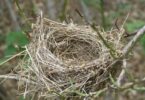
If I have a self, it is not an entity but an uneasy ecology. A place to hold anger and grief next to tenderness, nest of scavenged twigs where the second pulse beats. I see now its shell is surprisingly delicate. That the pain must be cared for too.
Nothing in this world is an intruder.
Maybe that’s why it’s the wounded art I cling to: composites of impulses and ruptures, fragments of earth and bone and toxins. Art that offers not a cleansing but a reminder that purity was never the goal. Dirt is earth. It’s where we live. It’s what we have.
I lie in the dark with my heart, feeling it beat like a bullet or like rain. Soon daylight will rise on a confluence of dust streams and the birds will start again.
[1] CBC Radio. “As It Happens: This sculptor got heavy metal poisoning from working with mussel shells.” CBC. Online. December 4, 2018.
[2] Gillian Genser. “My beautiful death.” Toronto Life. Online. November 28, 2018.
[3] “Fragile, by Gillian Genser Artist Talk Nov 2024.” Tangled Arts. Online. December 13, 2024.
[4] Gillian Genser. “My beautiful death.” Toronto Life. Online. November 28, 2018.
[5] War of the Foxes. Port Townsend: Copper Canyon Press. 2015.
[6] Oakland: Wolfman Books. 2019.
[7] Although trans men and nonbinary people also experience these complications, Beilin’s accounts are all drawn from women.
[8] In her memoir of mental illness, An Unquiet Mind, Kay Redfield Jamison writes, “Which of my feelings are real? Which of the me’s is me?” (1996: 68). I post the quote on my Facebook at four in the morning. A few friends like the status, but no one answers.
[9] Genser, “My beautiful death.”
[10] Ibid.
[11] ibid.
[12] Articles differ in timeline regarding whether Genser was diagnosed shortly before or shortly after meeting the invertebrate specialist. I have based this account off Genser’s own words in “My Beautiful Death,” though the ambiguity speaks to the inevitable instability of narrative.
[13] Genser in interview with Michael Kaminer. “This Jewish Feminist Artist Was Poisoned — By Her Own Artwork.” Forward. Online. February 4, 2019.
[14] “Fragile, by Gillian Genser Artist Talk Nov 2024.” Tangled Arts. Online. December 13, 2024.
[15] “My beautiful death.”
[16] “Rant.” Empty Chairs. Trans. Ming Di and Jenifer Stern. Minneapolis: Graywolf Press. 2015.
[17] Genser, “My beautiful death.”
[18] Gillian Genser. “adam.” GillianGenser.com. Online.
[19] “Queer Performativity: Warhol’s Shyness/Warhol’s Whiteness” in Pop Out: Queer Warhol. Ed. Jennifer Doyle, Jonathan Flatley, and José-Esteban Muñoz. Durham and London: Duke University Press. 1996.
[20] Ibid
[21] “Artist Statement.” GillianGenser.com
[22] “Fragile, by Gillian Genser Artist Talk Nov 2024.” Tangled Arts. Online. December 13, 2024.
[23] “bird.” GillianGenser.com. Online.
[24] “bird.” GillianGenser.com
[25] The Vertical Interrogation of Strangers. 2001. Berkeley: Kelsey Street Press.
[26] Poem Bitten by a Man. Nightboat. 2023.
[27] “Black Telephone.” Spork Editor’s Pages. Spork 1:3. Online. Accessed January 10, 2026.
[28] “Wild Geese.” Dream Work. Atlantic Monthly Press. 1986.
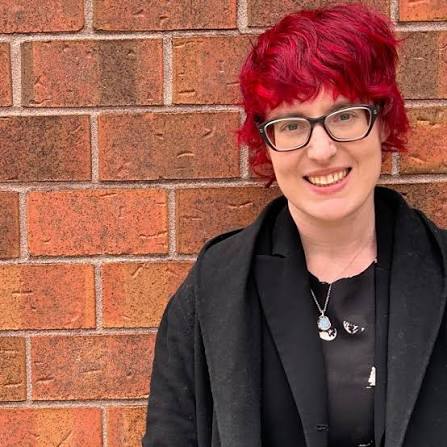 M. Longman is the author of The Danger Model (McGill-Queen’s University Press, 2019), which received the Quebec Writers’ Federation Concordia University First Book Prize. Her writing appears in Room, PRISM international, The Ex-Puritan, and elsewhere. In 2025, she received the Joseph S. Stauffer Prize in Literature.