Translated from Slovenian by Lukas Debeljak
I had literally fallen off the couch. Lying prone, studying the leafy landscape of the closed orb, where I had planted my grasses and sedges, I saw something move amidst the stems. Something green. I flinch, turning in astonishment from my position on the couch towards the globe, ready to face the threat, and tumble across the floor. I press my face against the plexiglass; maybe it was just a leaf, but I don’t think it’s likely in the closed atmosphere of the glass where even the air stands still.
Then I see the small green streak, maybe a centimetre long, a centimetre and a half at most. It darts across the soil and under the wood. I hear my heart in my ears, together with my tinnitus, the frequency of which immediately increases by several decibels. The tinnitus comes from my noisy workplace; it’s perfect for me, who loves silence. I breathe, pulsate, a buzz in my head, staring at the plexiglass globe for what seems like an eternity—there! Tiny and tailed, a long, bright green body flits by. That’s when I see the rest, the two little legs on each side, the ribs, the rounded fingers. What the hell is that? Is it a lizard?
◊ ◊ ◊
It’s been three weeks since my seeds finally arrived, packed in teabags by erthwrm, my online connection to India for all things botanical. A generic box of fancy black tea, nothing special or suspicious. Inside, I find small shapes in multiple sizes, different grasses and orchids, and no information whatsoever about the species, their ages, what kind of care they need. I’m always annoyed by these middlemen, but what can I do, even if I wrote the guy, he wouldn’t respond, he’s not exactly Gardenia Nursery. Considering how cheap they were, it’s a relief they came at all. Still waiting for the soil to arrive, I have nothing else to do but stash them at the bottom of the drawer where it’s dark and dry.
I got off early that night and was still wide awake when I arrived home at 2 AM. A shower, a litre of water, a dose of melatonin, a joint. If I don’t sleep by four, the next day is completely ruined. I pick up a book about the mangrove eco-systems of the Andaman Islands and fall asleep beneath the smooth damp surfaces of their green leaves, cooling the tropical air. I feel them touching my palms, moving across my bare feet, calming me. Seriously, though, I doubt I’d go stomping across wetlands without boots, but now, lying on the couch submerged in pink light, the quiet current of the aquarium releasing oxygen into the water, the bubbles streaming across my eyelids, in this dead hour devoid of animal noises, my favorite hour, and in spite of how tired I am, it’s now that I can imagine the touch of tropical grass across the soles of my feet. I’m hoping the first birds, as they awake shrieking from their sleep before the dawn comes, won’t wake me.
◊ ◊ ◊
It takes me forty, fifty minutes, tops, to clean the aquariums and trim the aquatic plants; then it’s minerals for them and coffee for me, and then I move to the greenhouse, which is really just my covered balcony, to take care of the land plants too, and finally re-supply the stuff. When Ki was still living with me, I was always worried that a plant might die when I went off to work the festivals for a couple days. He had no relationship to plants, living among them with no sensitivity as if they were furniture. I mean, he was actually the one who was always travelling, but when we would retell our story to friends, he always liked to say that I picked him up in Perth under the pretext that we would go surfing in Trigg together when really he just wanted help finding his obsession, the Sturt pea. As if seeing those bright red fields open onto the steppe isn’t one of the craziest things that can happen to a person; and, of course, I wasn’t allowed to bring the seeds home. Instead of my exotic plants, as he joked, I brought home to Ljubljana an even rarer specimen, a Korean guy. But the Swainsona formosa only grows in Australia, whereas hot guys on Grindr can be found anywhere—my comment always created a tense atmosphere before the sex, at least in the beginning.
It was remarkable, Ki’s fine, translucent skin among the exotic plants I had collected from all the continents. I was attracted to this otherness. There was something stubborn but also adaptable about him, his ethereality unresponsive and resilient, like a morning glory. He was a secret I never managed to decipher, nor did I really try to, who knows when it comes to people—Ki functioned completely smoothly according to dictates that were known only to him. I often saw his motionless face when I would wake up at night, washed in the screen’s pale light; always the same enigmatic image. He reminded me of the translucent motion of algae as they invisibly circulate oxygen through their bodies. He wasn’t a part of my world, at least first off. Equally incomprehensible to me was the nonchalance with which his parents sent off a twelve-year-old boy to another continent, to school in Australia.
You can’t know our life in Seoul. My folks ran a liquor store that collapsed. They worked all day and night, we were locked in an apartment with one room. The school sent us warnings because we never went.
Who didn’t?
Me and the girls. Two sisters.
But sending a kid to another continent? I wasn’t even allowed to take the train alone when I was twelve.
He smiles and, like usual, I can’t read his mind.
Weren’t you close?
We were. But there was a better life.
As if what is uprooted and replanted is better, richer, with more room to grow. But I know, for real, it’s not, it has no bonds. I couldn’t understand him, but the way he spoke Slovenian always turned me on.
Ki was insatiable, wrapping himself around me after sex, but I got the feeling that he’d entangle his body with someone else’s just as easily. It bothered me vaguely at first, but, I now know, more and more acutely as time passed.
◊ ◊ ◊
I could still see him for a moment in that Hamburg club, amidst the glistening skin and hands that lavishly grasped at air, in the pulse of red and blue light; it was seared into me forever, the hot-cold image of a person who was transparent to me, the mere impression of fine, invisible possibilities that spread in all directions. I didn’t see Ki again. We spent the remaining days in separate apartments and I returned to Ljubljana alone. He stayed up north and I sent what little clothing he had left at my place, as well as his Yamamoto sneakers, to the address he had given me. He didn’t own anything special—books or photographs, a Buddha statue—, like so many designers he carried everything on his laptop, or maybe the laptop merely transmitted the humanly-shaped world to him.
That was years ago. My time is more structured now, more space for the occasional visits of young, eager boys, the study of orchids and ferns. Whoever thinks there’s no mess or hurt when it comes to them is wrong, some have never thrived with me. But they are quieter, moving slower, their closeness calming. Plants don’t really have a choice: they tend to stick around and flourish.
◊ ◊ ◊
The first terrain I discovered was my neighbour’s overgrown shed. The sun beat down and I hid in the shadowy interior, inhaling the smell of soil and rotting wood. Everything around me ran riot; the blackberry bush gave me shelter, the hazel spread wildly, the strong colour of the heather served as a diversion. Everything that grew reached up towards the sun, unfurling through the air to attract bumblebees or repel donkeys. In this world, the only one I knew outside my narrow family circle, it was easy to imagine the overgrown planet of three million years ago as if I lived within its carbon. Most people don’t stop to think how the algae crawled out of the oceans, took root and kept climbing, slowly conquering practically all of the land on earth, both of its poles and all of its deserts. It was plants who came here first; they will remain. In this small but lavishly wild village environment, my five- or six-year-old self was this close to the ur-world. People didn’t intrude on the glowing connections that occurred in this struggle for space, where one shrub overcame and suffocated the others, and in which I disappeared completely.
Nowadays, my friends would be shocked to hear that there are thirty-thousand households that are not only without internet, but also electricity, and that they are very close to us. My village is in the poorest part of the country. To live alone in a city means to hide the word alone in an anthill. Never again did I experience a solitude as deep as the life of a five-year-old boy in the countryside and yet there were all kinds of other presences in my hiding place, another living and thriving happening there.
◊ ◊ ◊
I waste some time clicking on silicon pipes and variously sized species of parasitic wasps, choosing between different predatory mites that might kill the red spiders I had noticed on the Zamia leaves in the greenhouse. I’m trying to figure out how to avoid snails for cleaning aquariums. Mine are mostly inhabited by plants, just a few sheatfish peacefully float on the bottom. There’s no aggressive Siamese fighting fish here. They’re popular these days, anyone looking for a little colour in their room gets them, but with the exception of the sheatfish, only a couple of guppies swim through my forests of algae, and even those are only there to contribute nitrates. I throw in a packet of cherry crabs that don’t disrupt the eco-system, and if these little critters aren’t enough, I’ll go for the snails, which have the bad quality of reproducing at an abnormal rate. Years of work and observation hide behind these fragile balances.
I put on my sneakers, am in the park by eleven already. I do a couple of sprints on the trim trail, speeding past the occasional passerby. I begin every spring by jogging, when the air warms up enough to not burn my throat. Now is the best time, the sprouts and the whole great confusion of spring’s aroma still hidden, and I get to avoid the groups of bewildered tourists. Then my smart watch vibrates a second time.
What’s up?
Sorry if I woke you, I know it’s early…
No problem, what’s up?
Someone beat up Arif. After you left. He’s in the hospital.
Shit. I don’t say it out loud, but the voice on the other side knows what I mean.
It’s bad man. I was just there. They kicked up his kidneys, but also, worse, two broken ribs, one punctured a lung and they don’t know yet what could go wrong. If you saw his face … and how they treated us. It was like we had brought in the dirtiest of street junkies.
I force my jaw to relax and spit out the question.
Where was Slavc?
He finished his shift. Arif was supposed to close up but two guys stuck around.
And where were the two guys when they did it? And who did it?
In the bushes in the garden getting high. They found him on the floor on their way out. We don’t know who it was, you know, they were wearing masks.
Ok, I’ll go see him. Anything else I should know?
You don’t want to. They broke everything behind the bar, destroyed anything they could, the chairs, the tables. Don’t go ‘cause they won’t let you in. They’ll tell you the same thing they told me…
I hang up, dizzy. I slump against a tree, breathe. I stay sitting against the trunk for a while. It helps, I don’t know why. All I know is that it’s a catastrophe, they broke into the club, our main gathering point, again. Maybe the greater catastrophe is the media’s silence, the same every time these things happen. Just another one of those hassles—but didn’t they provoke it? And what about the youth? And what if? Who’s causing trouble? And who’s responsible?
◊ ◊ ◊
I haven’t been going to the meetings for years now. During the festival, I stay home, re-potting my plants. The last time I went to the parade was with Ki—for him, it was an attraction. As for me, the scene tires me out. I feel the same amount of care and responsibility for the club as I do for my plants, the important difference being that my community at home has a calming effect on me. The only time that club-related stuff isn’t a major hassle for me is when I put it in context, define its limits. That’s why we have rules, times, bouncers, a two-tiered security system. I’m no fun, I haven’t had a good time in a decade. Someone has to be the pro, to make sure everything goes smoothly so that people can have a nice party, safe in their bubbles. I don’t think the employees like me too much. Where the fuck was the bouncer? The two-tiered security system, it rings in my head. I can’t be there 24/7. Should I have been? The bouncer. Security. I can feel the emptiness settling inside me, the hollow air inside pressing against my membranes. I don’t want to think about Arif. A beautiful guy. I doubt he’s conscious.
◊ ◊ ◊
The transparent plexiglass globes I construct are my strangest experiment, I’m fascinated by them. Once I populate them with my chosen selection of plants and organic material, soil and wood, they are simultaneously artificial and natural, functioning as entirely isolated forms of co-habitation within a vacuum-sealed sphere. How do these eco-systems develop their own completely unique environments? The fallen leaves decompose into nutrients, and as the plants consume the carbon dioxide of the fungi in photosynthesis, they also exchange sugar and minerals. The fungi lead the plants to the water and soften the soil. It all unfolds so slowly, and yet right in front of my eyes.
Are you Arif’s brother? I run the club. Might as well tell him it was me who assaulted him.
They’re about to operate, they don’t know how badly the broken ribs damaged the lungs.
I see. There’s nowhere for me to put myself in the silence that falls on the hallway. Let alone to sit down on the bench beside him.
No sense in waiting for him. I’m here anyway.
◊ ◊ ◊
The fungi beneath the soil feel their way into the globe’s far corners, extending their hyphae and heralding change. Ceaseless chemical exchange occurs in my four spheres. Somewhere within, mold is siphoning the fungi’s nutrients, feasting on the host organism. Surprisingly, the flower begins to bloom from the mold’s rainbow surface, even when there are no insects or wind to facilitate reproduction. But these species exchange everything they require among each other, no need for rain, repotting, or fertilizer. Whatever dies is transformed into food.
While I’m in the club, dealing with the police and hauling off the broken furniture, packets of soil are delivered to me from the islands. It was a whole thing, getting the soil. I distract myself with the construction of a new orb, its perimeter almost a metre long. I populate it with common Andaman grasses. In the damp warmth of the tropical leaves, the blades shimmy out of the soil after only a week.
◊ ◊ ◊
A quiet signal from the cellphone.
It’s Samir, just to let you know the operation was a success. I mean, the lungs are pretty damaged, but… they’re hoping he’ll be okay. Silence.
Great. Stupid. I mean, thanks. For calling.
Arif asked me. Silence. Okay. The conversation ends.
Once in a while, an elongated antenna of orange fungi shoots upwards and attaches itself to the plexiglass: a probe, resonating in the emptiness. These spheres are like planets from other galaxies, or maybe like the Earth’s atmosphere from the time when it was still forming, when its oxygen was still scarce. We research geological layers from the past and guess what the planet was like, but we can’t know for sure. My spheres are like these planets still being formed, or coming after us, when everything has passed—that is, this wave of evolution that we’re riding, surfing on its swell.
◊ ◊ ◊
The next week I work every night, staying until closing time, locking up with the bouncer. The cops, our people, the journalists, everybody wants to isolate the incident, as if it won’t happen again, but I know it will, sooner or later. Two-thirds of our traffic drops off, I change the staff rotations, adapt the program. I’m exhausted but it seems essential for me to be there. We spent a moment daydreaming and the bubble burst. I know this country doesn’t have a lot of clubs I would feel comfortable in, but I’m no longer angry. I’m on autopilot. All I want is to be left alone, at home, tending to my eco-systems.
Friday night, Samir plants himself at the bar as if it’s completely normal, as if he comes here every week, even though I’ve never seen him before the break-in. He’s wearing jeans and a hunting jacket, sticking out like a sore thumb among the shining tight shirts and bare skin, and my throat is completely dry. He gestures at the bottles. Of course I can’t hear what he orders. I know by heart what most people here drink, and I know when they will switch drinks before they know it themselves. This isn’t the case with him, obviously, and I make him a gin and tonic, realizing immediately afterwards that he’s the beer-drinking type. He takes the drink without commenting and I struggle not to pour myself one as well.
Any news? I lean across the bar towards his head to get into earshot, almost touching his thick, black buzzcut.
No. He’s awake, in intensive care and high off his mind on the meds.
I’m really sorry. I don’t know if I mentioned.
Me too. I’m straight from the forest.
Say it again?
The jacket. I didn’t have time to change.
It doesn’t matter.
Of course it matters in this swarm of luminously painted wings, all the insects drawn in by the honey. I am still leaning over the bar towards his head. I can feel pairs of eyes observing me. I don’t like dealing with a single guest for too long.
We found a new herd of wild sheep.
Yeah?
Sometimes I work in the field with the foresters and hunters.
I have no idea what he’s talking about. A tracker?
Biologist. I flinch. I never asked him out loud.
I didn’t even know we had wild sheep. Just some more migrants, I guess. I think of all that mayhem in the wilderness, packs of wild game, their young, the hunters, animals crossing highways at night. All the prospects for catastrophe.
◊ ◊ ◊
As if the break-in at the club weren’t enough, now that I’ve found the lizard, another thing is keeping me up at night. He’s grown half a centimetre. I’ve no idea what he’s eating. A queasy feeling inside me, I run through a list of tropical lizards online to confirm he’s indigenous to the Andaman Islands, a small species of gecko. There’s no insects or fruit in the globe, how has he survived? The tiny eggs were probably buried in the soil—the female lays eggs in pairs that stick to the surface—and I restlessly scan the sphere to catch sight of another one. Nothing. The gecko hides beneath stumps of wood or dashes through the increasingly thick undergrowth, seemingly unbothered by anything. Maybe he’s eating the mushrooms? Since I’ve been observing him, his tail and head have turned turquoise and he’s acquired a spotted jaguar pattern. So he’s a male, I confirm, browsing through images. What to do with this guy?
◊ ◊ ◊
I buy an ice-cream in the hospital’s lobby and bring it to Arif. He is still not allowed to sit up, but he lifts his headboard with a push of the button when he catches sight of me, first laughing like always and then moaning from the pain in the ribs.
Arif. It’s so nice to see him that I want to caress him, even if his eyes are swollen, the green bruise migrating down his cheek. I see you’re rainbow-coloured now.
Trying to get me fat? He’s already unwrapping the ice cream and looks happy. I’m happy I came if I can make him laugh—there’s no long-term damage, thank god.
Gjde si, brate?[1] My face goes stiff. I was hoping to avoid Samir. Why does he come to the club? I feel bad enough without him there. We stand next to Arif’s bed, watching him as he recounts hospital horror stories.
What’s up with you two? Why are you staring at me?
I gotta go. See you soon.
Hey wait. He’s taller than Arif and older. Not that I mind being chased across the lobby by a broad-shouldered guy with rolled-up shirt sleeves.
Yeah? I don’t stop, I’m busy. A party on the coast over the weekend. Meeting at the club in half an hour. The gecko. Deliveries.
Where you running off to? He’s laughing but he can see right through me. Arif’s laugh, and yet a completely different person with his bright eyes. I don’t know what to say.
Want to go see the wild sheep with me?
At six in the morning?
At four.
That’s when I go to bed.
Everyday? You didn’t yesterday.
So. I guess he’s at the club every day at this point.
No. I don’t want to go.
◊ ◊ ◊
I stare at the prices of airline tickets to the Andaman Islands. What’s with you? There’s no way you’re going off jet-setting now, we have a situation on our hands, it’s high season, who will take care of the plants? And what, do you want to smuggle him in a matchstick box, dummy? If it doesn’t work with drugs and seeds, you won’t be able to get a lizard over the border either. Or he’ll die en route, you can’t just send him back, he’ll definitely die in the post. But he won’t survive in the globe. Or will he?
I curse the lizard and the middleman who sent him to me. Then I drill a hole and run a pipe of water mixed with pollen through it. Should I open the orb? If I set him free, he won’t survive a single day in the forest. Is one day in the forest better than an entire lifetime in the orb? I think of the prison sentence that awaits the guy who assaulted Arif. If it does. I measure the lizard. He hasn’t grown much. I could put a whole colony of the pet store’s small-size crickets in there and he still wouldn’t get to thirteen centimetres.
I peruse my book on the Andamans. Great, purple-green leaves like canopies over the undergrowth, hiding places. Moss on the ground, over the roots, the trunks, I hear water, its drip. The sound curtain of the tropical forest, silence stretching behind it. I lie in the undergrowth, getting lost, reeds growing through me. And the tinnitus, all my problems, anxiety, the couch, the gecko, dissolve along with me. I’m barely here on this island, decomposing.
The two of us sit, each motionless, each on our own floor in the pink glow of the grow lights. I’ve never liked pets.
◊ ◊ ◊
When I return from the gig on the coast, something’s off. Okay, the plants of course, two days without care will leave a mark, even with the irrigation system. The transparent tubes water them at appropriately timed intervals, but they still aren’t turned towards the evening sun.
I keep my shoes on, moving to the largest globe first. There’s the gecko, standing on a log. Why is he there? He’s always hid before. It looks like he’s stopped growing. I fall asleep on the couch and can’t find him in the morning.
◊ ◊ ◊
Yeah?
Your offer still on?
For the wild sheep? Sure. Still at four.
Okay. By the way, I’ve got to drop off an animal in the forest.
What do you mean? What animal?
A wild one. It belongs there.
I hope it’s not some sort of invasive species. Is it in a cage?
In a box. I hold the matchstick box between my thumb and index finger. I’ve placed the gecko inside it after opening the globe. I could’ve kept him inside, the fungi would have overrun and decomposed him. But I don’t know when my globe stopped being a planet.
◊ ◊ ◊
We drive out of the city at some ridiculous hour, I’m not feeling a day-trip into the forest. As consolation, I tell myself it’s work, even if not my work. We near the hills and turn off into the nature preserve, and I no longer recognize the roads he’s taking me down. The SUV tears its way through the muddy, stony terrain. It’s all quite strange in the middle of the night, the branches slapping against the car and windows. I imagine us tumbling into some ditch at any moment and then, what do I know, we might as well be attacked by a group of wild boars. I breathe a sigh of relief as we finally stop and exit the car. It’s dark and cold; why am I not in my bed? I notice an overhang above me and get the uneasy feeling that the rock will break off and crush us. We pant all the way to the top, where the view unfolds from the observatory. We lie on the wooden platform, as he told me we would earlier, everything should happen as quietly as possible. We stare at the line of horizon that is slowly growing lighter and every so often he picks up the binoculars.
About an hour later, or was it only ten minutes, my arms and legs frozen, my hips aching, he grabs my arm and points towards the rocky ledge. I peer through the binoculars, searching for a while and then see a single black dot, then another one, and then a whole herd, moving across the rocks. They’re very cautious, they keep to themselves and spend entire days searching for plants amongst the rocks, Samir whispers, they survive off whatever the deer can’t find. I try to calm my hands and breathing when I spot the large, curled horns of a male standing on the ledge. Some are solitary, they don’t live with the herd. And seven out of twelve months, they’re getting shot at.
The light above the hills turns golden and I can still feel the excited clasp of his hand, think it was a very fearful animal which caused our first touch. While he continues to tensely stare through the binoculars and fret with his screen—he is inputting numbers, coordinates, movements—I pull the matchstick box from my pocket. I set it on the edge of our observatory and open it.
We head back when he finishes up with his business. The morning is still new, untouched, but I know it won’t last. The small deaths happening all around us calm me, as if, in their midst, nothing worse could happen.
[1] “Where are you, bro?”, in the Bosnian phrase all Slovenians could understand.
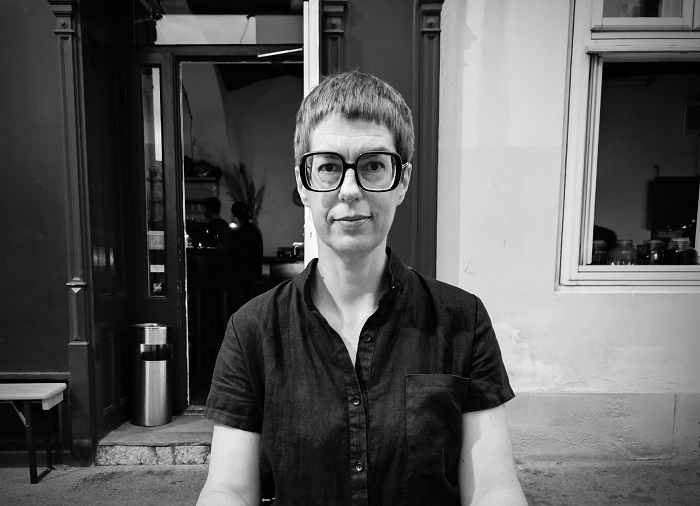 Jana Putrle Srdić is the author of four poetry collections, a queer novel, short stories, and essays on emerging art. Her work has appeared in The Los Angeles Review, West Branch, Fourteen Hills, Tupelo Quarterly, and Asymptote. Her novel Across the Plain Beneath the Sky was published in Spanish in 2024 and is forthcoming in English from Generous Press in 2026. janaputrlesrdic.eu
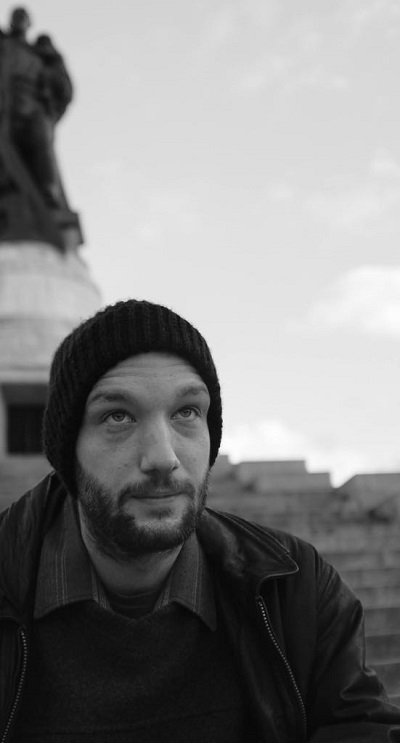 Lukas Debeljak studied in California, Berlin, and Vienna, where he is completing an MA in Historical Studies at Central European University. He has published two poetry books, To Know Like Water (2022) and A Tree Nobody is Writing (2025), both of which have received recognition in the Slovenian literary field, with the latter nominated for the Velenjica Award.