“Talk to dad yet?” Derek asks. His Civic is making the exit out of town along the highway. It’s the middle of the day, which feels a little late to be heading out but I can’t be up before eleven. My body just won’t do it.
I glance up from my phone, tuck it into my pocket. “Yeah, of course. I told him happy birthday and all that.”
“Right. But did you talk to him?”
I say nothing for a while. Just watch through the windshield as we climb the low hill out of town and leave behind the abandoned developments, trying to consider which of two possibilities Derek is talking about. We pass the first three campsites, the entry signs framed by trees. The ones that are always full this time of year.
“I thought it might be better in person. I think that might land better.”
“What are you going to say?”
“I don’t know. I wasn’t—I’m not planning to talk to him this weekend or anything. He’s been trying to get these tags for years. I don’t want to ruin it.”
“True,” he says, which stings. And we carry on in silence.
◊ ◊ ◊
It takes a few minutes of crunching along the gravel pathway before we’re at the campsite. Dad’s got the whole thing set up, all of it so familiar it’s like I’m thirteen again. He’s sitting under the old camper trailer’s striped awning in a lawn chair drinking a beer. Derek parks the car off to the side.
I can’t help but inhale as I step out, reflexive. That outdoor-fresh smell you can never remember perfectly when you’re away from it. I take a great lungful of citrusy fir, the decomposing understory, the smoke drifting lazily from the embers of the campfire. It’s the kind of air that feels so good in your lungs you just can’t get enough of it inside you.
Dad’s got on a pair of faded jeans and a pullover with the name of my university on it, which makes me feel like I need to take another deep breath. He’s got a ballcap on, any hair gone at some indeterminate point in my childhood.
He’s smiling as he approaches, gives us both a hug. Derek is taller than him, looks a lot more like our mom did. I’m the opposite. Everyone’s always said I’m the spitting image of my dad, even with hair. If you look at our baby pictures side by side it’s impossible to tell who’s who.
“Was wondering if you guys would stay in bed all day,” he says, still smiling.
“Yeah, well, don’t blame me.” Derek jerks his thumb at me, which I resent. I’m used to working late.
“Studying hard on the old sleep cycle, is it?” dad says, patting my shoulder.
“Sure.” I force a laugh. “Totally.”
Derek and I unpack the car while dad pokes at the fire and sets out a few more chairs. We’ll be here for the next five days. Less, if we get something early. As kids, Derek and I would get brought up here for five, six weeks of every summer. That stopped when we started complaining, wanting to do what our friends were doing instead. Visiting the other lake or going down to the river or just wandering around town, going to the outdoor swimming pool and getting Iced Capps. Dad came up alone after that. Sometimes we’d visit for a weekend. Bring our friends.
For dinner we grill up steaks on dad’s portable gas grill. He won’t let anyone else touch the meat, so Derek and I chop vegetables on a folding table. We’re supposed to be making salad, but it’s really just a bunch of vegetables and bottled dressing so dad can say he didn’t just eat steak for dinner.
“Ran into Barry Harrington on the way up here. Their cabin’s up for sale now. Said he wants to buy a condo down in Palm Desert.” Dad pauses, eyes on my hands, the perfect little julienned peppers. “When’d you learn to do that?”
It takes a moment for his last comment to register, and then my hand almost slips, hesitates. “Yeah,” I say, force a laugh again. Sometimes I work a few extra hours before my shift starts, prepping food with the cooks. I actually like those days. The rhythms of the kitchen, not having to put on my customer service face. “I’ve had to learn to cook. You know, the whole broke student thing.”
“Only until you finish that Master’s,” dad says.
I can feel Derek watching me again. “Yeah,” I say. “Yeah, totally.”
◊ ◊ ◊
“Are you going to tell him you dropped out, at least?”
It’s just me and Derek. Dad’s out in the bush having a piss. We can hear him humming along with the old radio he’s got set up on the folding table. He left his beer near his chair, only his fourth of the night, but I know from recent visits that it’ll likely be his last. He’s older now and knows it.
“I want to,” I say. It’s dark, our campfire throwing light and shadow across our faces. “I don’t really know the right way to do it.”
“It’s only going to get worse if you wait.”
“I know.” I want to say more but I don’t know what. It wasn’t exactly easy to tell Derek, to call him in the middle of the night and confess through my own drunk sobs that I’d first stopped going to class, then dropped out; that I’m working not on an internship or at the school but at a restaurant that serves overpriced little plates to guys in puffer vests hosting client meetings. And then that second thing, too. Not the kind of thing that’s easily explained. There’s too much context required, things I needed to learn first, year over year, about myself that I can’t explain away in a few sentences, or even a few hours. I still don’t think Derek gets it.
He doesn’t say anything else before dad comes back from the bushes. “I think I’m gonna pack it in, boys.”
“What time do we have to be up exactly?” Derek asks.
“I like maybe four, four-thirty. I don’t want to miss one.”
I nod, Derek nods. We both stand up and say goodnight to dad, say nothing else to each other before we crawl into our sleeping bags. Derek falls asleep right away. It takes me a little longer.
◊ ◊ ◊
We don’t get anything that first morning.
I mostly just try to keep my eyes open, dad’s old truck bumping around as we drive through the logging roads. We kick up gravel and dust before parking and walking from the world of dusty grey into the silver darkness of the forest. The three of us look ridiculous as we step slowly over logs, branches. Derek’s got on full camouflage—jacket, pants, hat. I’m wearing his oversized camo jacket and dad’s got on an old piece that looks almost like a ghillie suit. I’m carrying a rifle, the familiar heft of it almost a comfort in my hand. Something solid, known. I entertain myself with thoughts of what my friends would think, knowing that.
We help dad set up his portable blinds. They look like tents, but are small and cramped so our bodies are shoved close together when we only use one that first day. I try to say something about that, make some kind of joke, but they shush me. We’re silent for hours, just sitting like that. Watching.
“Typical,” dad says on the drive back. “I never get anything the first morning. You know, your grandpa wouldn’t even go out the first morning of a trip.”
“I know,” Derek agrees, nodding. He’s already got a beer cracked. I’m riding in the back. It’s one of those old trucks with the backseats that face each other. The combination of sitting like that and the smell of old coffee and car makes me feel sick as we bump our way back to camp.
“I just hope the rest of the trip goes a bit better,” dad says.
“No kidding.” Derek snorts over the rim of his beer. “You’ve been waiting—what, thirty years for this?”
Dad’s nodding. “Your grandpa would always say you’re not even a man until you get your first elk. Or moose. Of course, in his day you didn’t have to jump through a bunch of hoops and enter a fucking lottery just to be allowed to shoot something. I’ve applied every damn year. Eighteen-year-old kids are getting in on their first try, and I never do.”
“Yeah, well, this is the year then,” Derek says.
“That’s the funny part, isn’t it? I’ve waited this long, and suddenly it’s here. But your grandpa isn’t. It’s a shame.”
Derek doesn’t reply and neither do I.
◊ ◊ ◊
The days and evenings become routine. Derek and dad do this kind of thing so regularly that they don’t even need to use words with each other half the time. They know when to grab each other a beer, when the other will be hungry. They pull their chairs up to the beach and look out at the water and laugh about old stories and even stories that aren’t that old but I’ve never heard because I so rarely come home.
It’s me that’s out of joint, awkward. I had to take every hour of banked time off I had at the restaurant to get these days off, had to beg and negotiate and bargain with people to cover shifts. But now I’m like an extra piece, the screw left at the bottom of the bag after the furniture’s been assembled. They don’t really know what to do with me, but they can’t just shove me into the back of a drawer. Every once in a while, partway through a joke or a story, their eyes will find me and it’s like they’ve only just realized that I, too, am here.
I go for walks. There’s trails all around the campsite, marked out by laminated maps nailed to trees. They include a bit of information about the area (this trail is forty-two years old…) as well as a skill level (800 m elevation, red star difficulty) and a map that implies a general sense of direction.
I stick to the easy paths, skipping elevation or anything that’ll take longer than an hour. I go in the mornings after we get back from failed attempts at stalking elk, but I start to go a little more often after dad and Derek work through their usual catalog of conversation topics and dad starts asking about school. It’s one thing to lie obliquely with vague gestures and omissions, but more difficult when he wants to know details. I steer him away from questions about projects, classmates, professors. Which girls I’m dating.
We spend most of the nights sitting around the fire drinking beers and eating what comes off the grill. Smokies and burgers, mostly. The area is constantly fragrant with sizzling fat and protein.
I ask dad questions I know will lead to meandering stories about his old work. He’s been retired a few years now, still loves nothing more than to talk about it.
“God damn, you should have seen Jerry Jameson the first time he walked onto a site,” dad’s saying. I nod along with him. “Terry Glass says this kid is something else. Well, Christ. He’s carrying three times as much plywood as everyone else and holding it all with one hand while he puts the nails in. Full sheets. Never seen a stronger guy than Jerry.”
“Where’s he at now?” I ask, like I don’t know that he’s got his own contracting company out in the bay, like dad hasn’t told me that before.
“He’s got his own company doing contracting. Out by the bay,” dad says. “Getting ready to retire soon too, though. Business is just too good right now. Hard to walk away from that kind of money.”
He’s enough beers in that I think he’s probably going to fade pretty soon. A couple more stories, a couple more silences. Then it’s just tomorrow night, and then I’m back to Vancouver the next morning, back to real life.
It’s into one of those short, intermittent silences that Derek, who’s been quiet most of the night, says, “You see Terry Glass’s kid is gay?”
It’s like there’s a foot on my neck, pushing me down into the earth.
Dad just takes a long sip of his beer. “No, I didn’t. He said that? Online or what?”
“Yeah. He posted about it on Facebook. His dad shared it.”
“Huh,” dad says. He shrugs. “I guess it’s not surprising. Was always a little…” he sticks out his hand and tilts it side to side, as if that meant something very specific that we’d both understand.
“Yeah,” Derek says, laughing. “Totally.”
◊ ◊ ◊
“He wouldn’t care,” Derek is saying, his voice so low it’s hard to hear.
“You don’t know that,” I say.
“About school, yeah. He might be pissed or whatever. But for—the other stuff. He wouldn’t care really. Might just be shocked.”
“I don’t think that’s the problem,” I say.
“Then what?”
“I just don’t feel like now is a good time to talk about it. This, any of it.” I glance to my right. Dad’s not far off, crouched behind a blind like us, waiting for something to happen. It’s the last morning of the trip, our last chance to get something to show for our efforts.
“You heard what he said last night, though,” Derek says, sounds genuinely confused. “He didn’t give a shit about Terry Glass’s kid.”
“Yeah, but everyone knew he was a fag, huh?”
Derek snorts. “He’s just from a different generation. Besides, you don’t act like that.”
“Sure. Yeah.”
“Terry’s kid was always kind of, you know. But you’re not like that.”
“Uh-huh.”
Derek looks at me funny.
Before either of us can say anything else, there’s the smallest of noises from across the clearing. The gentle shifting of a branch. All of our heads snap up in sync, and so we probably see the elk at the same time as it steps out into the clearing, right into both our shooting lanes—six points on the antlers, its muscular shoulders shimmering as it slowly makes its way across the forest floor. The light hasn’t come out fully, and so we can just barely make out its features. There’s no vividness to the colour of the forest, all of the greens and browns dull as though they’d never been properly saturated. The only movement is this beast, gracefully moving through that stillness.
Muscle-memory takes over. Motions done a thousand times. I lift my gun and sight the elk. I can hear, can feel Derek doing the same. And dad.
The three gunshots clap together into that silence.
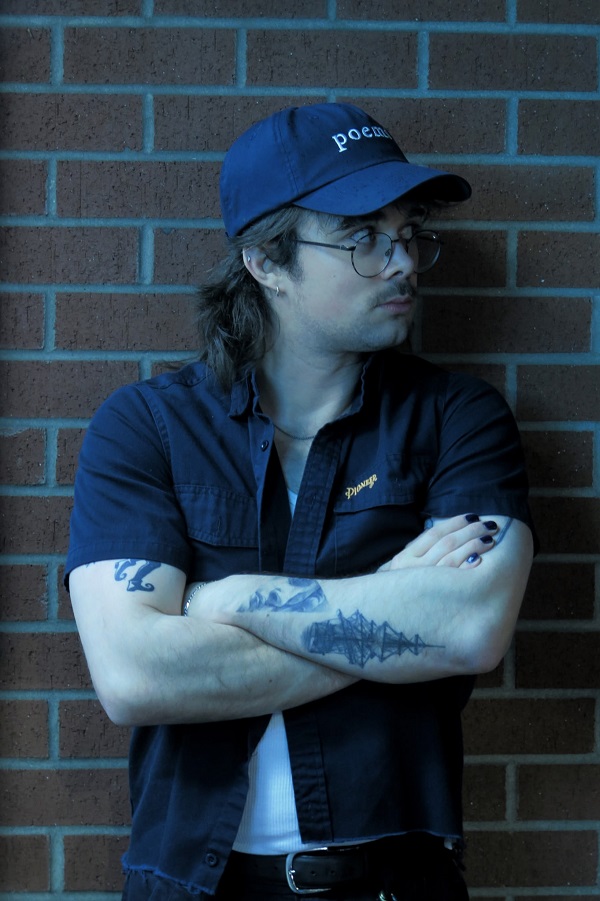 Brett Nelson works and writes on the unceded traditional territories of the xʷməθkʷəy̓əm (Musqueam), Sḵwx̱wú7mesh (Squamish), and səlilwətaɬ (Tsleil-Waututh) Nations. His fiction has been longlisted for the 2026 CBC Short Story Prize, published in The Malahat Review, and is forthcoming in Does It Have Pockets? His nonfiction has appeared in Briarpatch, Current Affairs, and elsewhere. He is the prose editor of PRISM international.